Retatrutide
What Is Retatrutide?
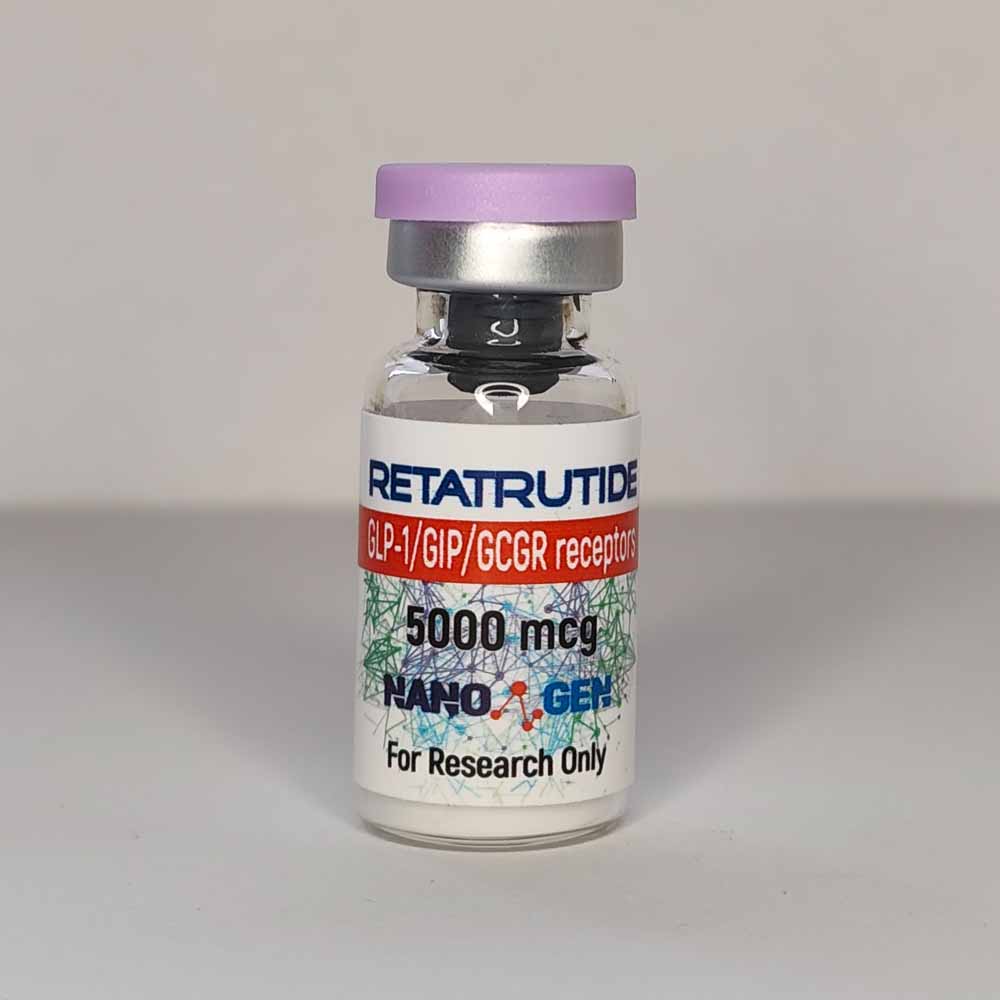
Retatrutide is a new investigational compound being studied primarily for weight reduction and its effects on metabolic processes.
Its key feature is its ability to act simultaneously on three receptor systems involved in appetite regulation, blood glucose control, and energy metabolism: GLP-1, GIP, and glucagon receptors.
In simple terms, Retatrutide may help people feel full for longer, reduce hunger, and decrease overall food intake. At the same time, it affects processes involved in how the body uses and expends energy.
Retatrutide has some similarities to Semaglutide and Tirzepatide, but it acts on three receptors rather than one or two. For this reason, it is described as a triple receptor agonist.
Retatrutide is currently being studied for its potential role in weight management, obesity, appetite regulation, and metabolic disorders.
Chemical Structure of Retatrutide
Retatrutide (LY3437943) is a synthetic, modified peptide composed of 39 amino acids.
Its molecular structure was developed using the natural GIP hormone as a structural basis, with specific amino acid modifications introduced to produce the desired biological properties.
The Retatrutide structure includes specialized amino acid modifications such as Aib (2-aminoisobutyric acid) and α-methylleucine.
An additional side chain is attached to one of the lysine residues. This side chain contains an AEEA spacer, γ-glutamic acid, and a long C20 dicarboxylic acid chain. This type of modification is known as lipidation.
Amino Acid Sequence
Molecular formula: C₂₂₁H₃₄₂N₄₆O₆₈.
Approximate molecular weight: 4731.3 Da.
Overall, Retatrutide is a complex modified peptide designed to interact with GIP, GLP-1, and glucagon receptors.
Potential Benefits of Retatrutide
Retatrutide is being investigated for its combined effects on appetite, body weight, and metabolism. Its mechanism involves several natural pathways that participate in hunger regulation, glucose control, and energy expenditure.
The main feature of Retatrutide is its combined action on several biological pathways involved in appetite, weight regulation, and metabolism.
Retatrutide for Weight Loss
Retatrutide is being studied for weight reduction and obesity management. Its distinctive feature is its combined effect on appetite, satiety, and metabolic processes.
Retatrutide may help reduce hunger and promote an earlier feeling of fullness during meals. Satiety may also last longer after eating, making it easier to consume smaller portions and reduce unnecessary snacking.
Retatrutide also affects processes involved in how the body uses carbohydrates, fats, and energy.
Clinical studies involving people with obesity have demonstrated substantial reductions in body weight, making Retatrutide an important investigational compound in the field of weight management.
Retatrutide Side Effects
Like other compounds that affect appetite and digestion, Retatrutide may cause side effects. The most commonly reported effects are related to the gastrointestinal system.
The type and intensity of side effects may vary considerably from person to person.
How Is Retatrutide Administered?
Retatrutide is being investigated as a subcutaneous injection.
In clinical studies, it has been administered once weekly by subcutaneous injection. Subcutaneous administration means that the compound is injected into the fatty tissue beneath the skin rather than directly into a muscle or vein.
Clinical studies also use gradual dose escalation. This approach allows the body to adapt and may help reduce the intensity of gastrointestinal side effects.
What Forms of Retatrutide Are Available?
Retatrutide is a peptide-based compound. It can be encountered in different physical forms depending on its intended use and presentation.
Retatrutide Reviews and Study Results
Retatrutide has attracted considerable attention because of clinical study results related to appetite control and body-weight reduction.
In the Phase 3 TRIUMPH-1 study, participants receiving the investigated 12 mg dose achieved an average body-weight reduction of 28.3% over 80 weeks.
Among the positive changes observed or discussed in relation to clinical studies are:
At the same time, some participants experienced side effects including nausea, diarrhea, constipation, and vomiting.
Retatrutide Delivery
Retatrutide delivery is available to Ukraine and multiple European destinations.
International delivery is available with a choice of destination. Delivery times depend on the destination country and selected shipping method.
Frequently Asked Questions About Retatrutide
What is Retatrutide?
Retatrutide is an investigational peptide that simultaneously activates GLP-1, GIP, and glucagon receptors. It is being studied primarily for weight management, obesity, and metabolic health.
How does Retatrutide work?
Retatrutide acts on three receptor systems involved in appetite, satiety, blood glucose regulation, and energy metabolism. This combined mechanism may help reduce hunger, prolong fullness, and influence how the body uses energy.
Is Retatrutide used for weight loss?
Retatrutide is being extensively studied for weight reduction and obesity management. Clinical studies have shown substantial reductions in body weight among participants receiving investigated doses.
How often is Retatrutide administered?
In clinical studies, Retatrutide has been investigated as a once-weekly subcutaneous injection.
What are the most common Retatrutide side effects?
The most commonly reported side effects are gastrointestinal and may include nausea, diarrhea, constipation, vomiting, reduced appetite, and abdominal discomfort.
What is the difference between Retatrutide, Tirzepatide, and Semaglutide?
Semaglutide primarily acts on the GLP-1 receptor, while Tirzepatide acts on both GIP and GLP-1 receptors. Retatrutide differs by targeting three receptor systems simultaneously: GIP, GLP-1, and glucagon receptors.