1. May Reduce Hunger
Cagrilintide acts similarly to the natural hormone amylin and sends signals to the brain indicating that the body has received enough food. This may make feelings of hunger less intense.
Cagrilintide is a peptide-based investigational substance being developed for weight management and appetite control. It is an analogue of amylin, a natural hormone produced by the pancreas after food intake.
Cagrilintide affects areas of the brain involved in regulating hunger and satiety. As a result, a person may feel full sooner, remain satisfied for longer and consume less food. It also slows gastric emptying, which may help prolong the feeling of fullness.
Cagrilintide does not belong to the GLP-1 drug class, which includes semaglutide. It works through a different mechanism but is also being studied in combination with semaglutide. This combination is known as CagriSema and is being investigated for the treatment of obesity and excess body weight.
Cagrilintide is administered by subcutaneous injection, generally once a week in clinical studies. The most commonly reported side effects involve the digestive system and may include nausea, constipation, diarrhoea, vomiting and stomach discomfort.
Cagrilintide is still undergoing clinical research. It is not currently a standard, officially approved medicinal product, and its effectiveness, safe dosages and potential risks continue to be evaluated.
Cagrilintide is a modified peptide consisting of a chain of 37 amino acids.
Its molecular formula is C194H312N54O59S2 , and its molecular weight is approximately 4,409 g/mol.
The structure of cagrilintide contains a disulfide bond that helps the molecule maintain a stable shape. A long-chain fatty acid is also attached to the peptide. This modification slows its elimination from the body and contributes to its prolonged activity.
In simple terms, cagrilintide consists of an amino acid chain and additional chemical components that improve its stability and allow it to remain active in the body for a longer period.
Amylin is a natural peptide hormone produced by the pancreas together with insulin, mainly after food intake. Its primary role is to help the body regulate blood glucose levels and appetite.
After a meal, amylin sends a satiety signal to the brain. This helps a person feel full sooner and remain satisfied for longer. Amylin also slows the movement of food from the stomach into the intestine, allowing nutrients and glucose to enter the bloodstream more gradually.
Amylin also reduces excessive glucagon release. Glucagon is a hormone that causes the liver to release glucose into the bloodstream. In this way, amylin may help reduce sharp increases in blood glucose after meals.
In simple terms, insulin helps cells absorb glucose, while amylin regulates how quickly glucose enters the bloodstream and signals that the body has received enough food . These hormones work together and complement each other.
Cagrilintide acts similarly to the natural hormone amylin and sends signals to the brain indicating that the body has received enough food. This may make feelings of hunger less intense.
During a meal, a person may feel full sooner. This may help reduce portion sizes without causing a constant feeling of severe hunger.
Cagrilintide may help maintain a feeling of satiety for longer after eating. As a result, the desire to snack frequently or eat again shortly after a main meal may decrease.
By reducing hunger and promoting earlier satiety, cagrilintide may make it easier to control portion sizes and total calorie intake.
In clinical studies, cagrilintide use has been associated with weight loss in people with excess body weight or obesity.
Cagrilintide has been designed to leave the body slowly. For this reason, it is administered by subcutaneous injection once a week rather than every day in clinical studies.
Cagrilintide acts through the amylin system, while semaglutide acts through GLP-1 receptors. These different mechanisms allow researchers to study their combined use for appetite control and weight reduction.
Cagrilintide is not a conventional fat burner and does not directly accelerate fat breakdown. Its main effects are associated with the regulation of hunger, satiety and food intake.
Cagrilintide remains an investigational substance. Its final effectiveness, safety profile and official indications continue to be studied.
The main potential target group includes adults who find it difficult to achieve significant weight loss through diet and physical activity alone.
Cagrilintide may be of interest to people whose excess weight increases the risk of metabolic disorders, cardiovascular disease or type 2 diabetes.
Cagrilintide, both alone and in combination with semaglutide, is being studied in patients who need to manage both body weight and blood glucose levels.
This group may include people who experience persistent hunger, cravings for high-calorie foods, frequent snacking or difficulty controlling portion sizes.
Cagrilintide acts through the amylin system, so its mechanism differs from that of GLP-1 receptor agonists.
In the future, cagrilintide may be relevant to people managing their weight under the supervision of an endocrinologist or obesity-treatment specialist.
Cagrilintide affects appetite and slows the movement of food from the stomach into the intestine. For this reason, most reported side effects involve the digestive system.
Nausea is one of the most commonly reported side effects. It may be more noticeable at the beginning of use.
Because the digestive tract may work more slowly, bowel movements may become less frequent or more difficult.
Some people may experience loose or frequent bowel movements.
Vomiting may occur in cases of severe nausea or poor tolerance. Frequent vomiting may lead to dehydration.
Possible symptoms may include heaviness, bloating, cramps or an uncomfortable feeling of fullness in the stomach.
A person may feel full after eating only a small amount of food.
Redness, itching, tenderness or mild swelling may occur at the injection site.
The main form of cagrilintide being studied in clinical trials is a solution for subcutaneous injection.
Cagrilintide is also being investigated as part of the CagriSema combination, which contains both cagrilintide and semaglutide.
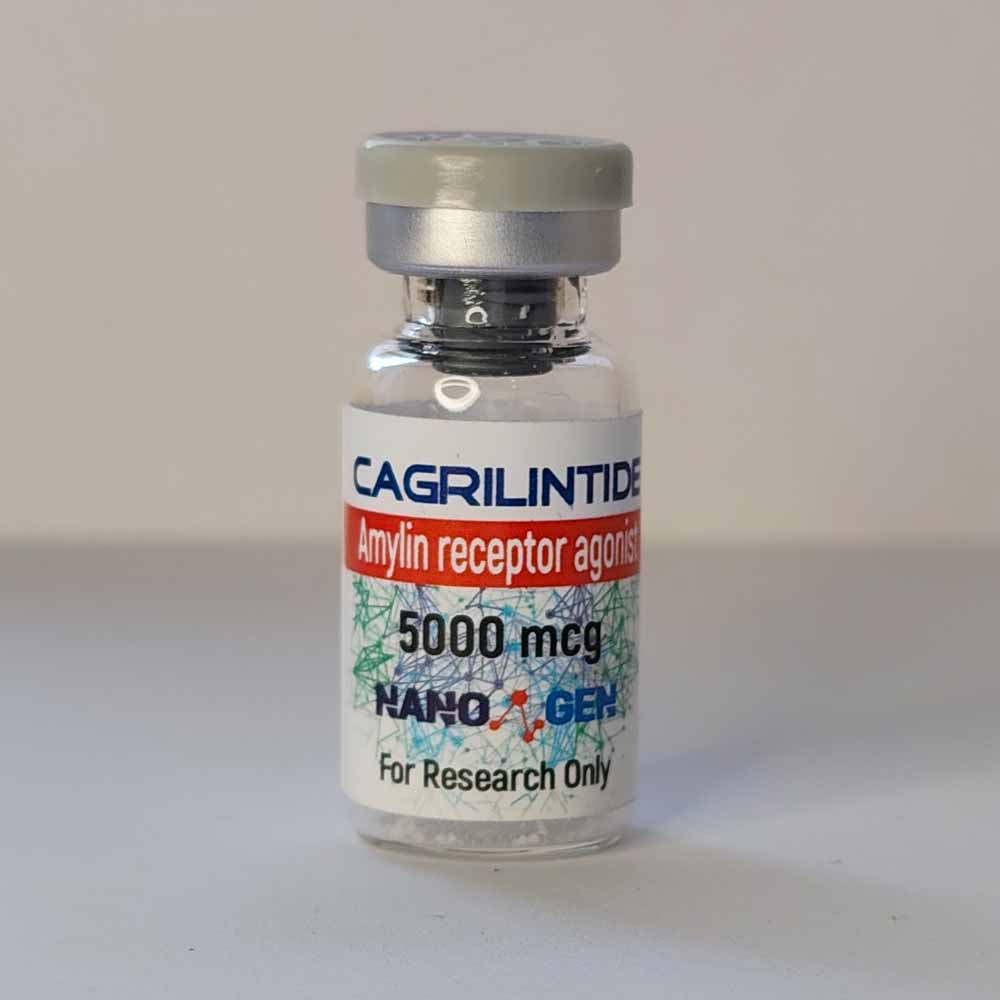
Cagrilintide may also be found online in the form of a lyophilised powder in vials. This type of powder must be reconstituted before use.
Cagrilintide is not officially available in the form of tablets, capsules or nasal sprays.
In clinical studies, cagrilintide is administered by subcutaneous injection once a week. Doses ranging from 0.3 mg to 4.5 mg have been investigated.
Researchers generally begin with a lower dose and gradually increase it. This allows the body to adapt and may reduce the likelihood of side effects.
There is currently no officially approved dosing schedule for cagrilintide. The doses stated above are research data and should not be interpreted as instructions for self-administration.
Cagrilintide is not currently available from standard pharmacies because it remains under clinical investigation.
Cagrilintide may be offered online as a research peptide.
International delivery is available to selected European countries and Ukraine. Delivery time and cost depend on the destination country and the selected shipping method.
Delivery is available to the following countries:
Cagrilintide is an amylin analogue that primarily affects hunger and satiety. Semaglutide is a GLP-1 receptor agonist and works through a different hormonal pathway.
Yes. Cagrilintide is being investigated for appetite control and weight reduction in adults with excess body weight or obesity.
No. Cagrilintide is an amylin analogue and acts through amylin receptors. Its mechanism of action is different from that of semaglutide and other GLP-1 receptor agonists.
CagriSema is an investigational combination of cagrilintide and semaglutide. The combination of two substances with different mechanisms is being studied for appetite control and weight reduction.
In clinical studies, cagrilintide is generally administered by subcutaneous injection once a week. There is currently no officially approved dosing schedule.
The most commonly reported effects include nausea, constipation, diarrhoea, vomiting, abdominal discomfort and injection-site reactions.
Cagrilintide remains an investigational substance and is not an officially approved medicine for self-treatment. The information provided on this page is for general informational purposes only and does not constitute medical advice.