
5-amino-1MQ NNMT Inhibitor
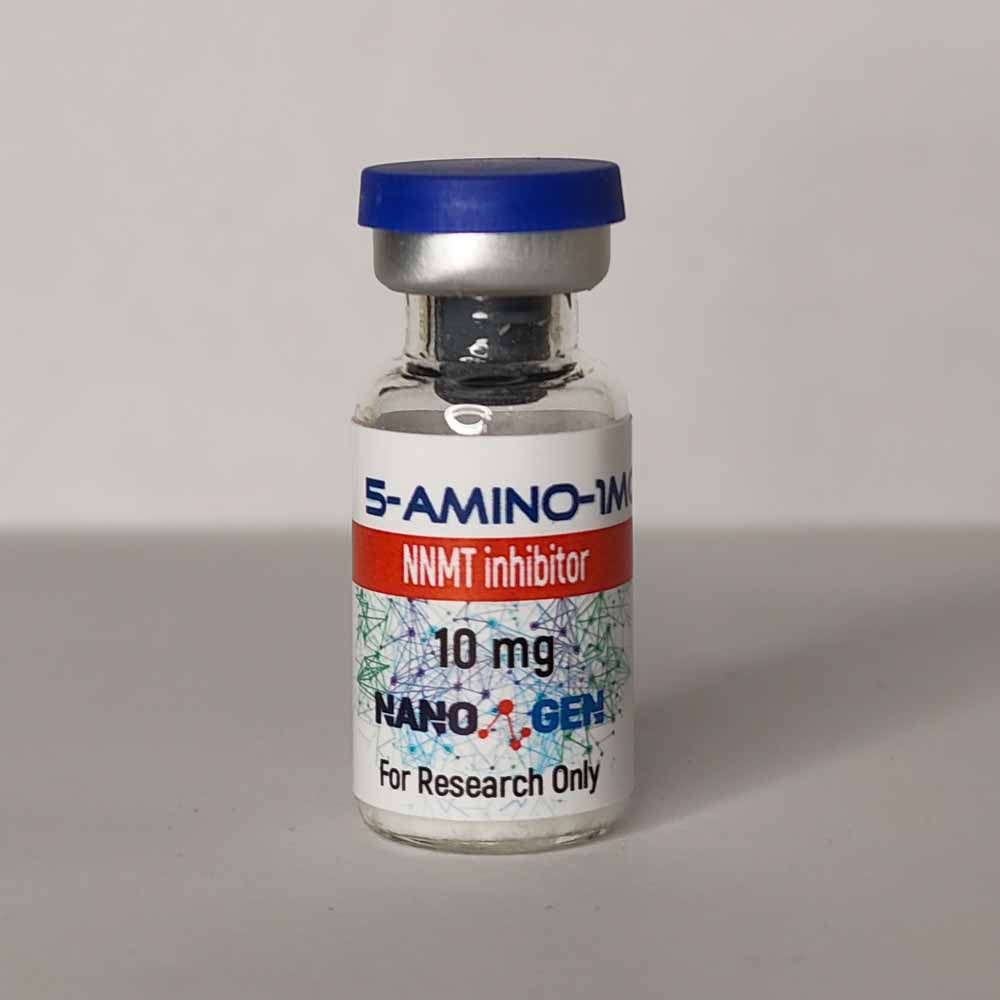
5-amino-1MQ NNMT Inhibitor: Detailed Description
5-amino-1MQ, also known as 5-amino-1-methylquinolinium, is a research small-molecule compound studied as an inhibitor of the NNMT enzyme. The full name of NNMT is nicotinamide N-methyltransferase. Interest in 5-amino-1MQ is associated with its possible influence on cellular metabolism, energy balance, adipose tissue, NAD+-dependent processes, and the regulation of metabolic pathways.
The main feature of 5-amino-1MQ is that it is not a conventional vitamin, amino acid, or peptide. Although it is often discussed alongside peptides and metabolic bioregulators, 5-amino-1MQ is chemically a small molecule. Its main research value is not related to direct replacement of any substance, but to its influence on the activity of the NNMT enzyme, which participates in nicotinamide metabolism.
NNMT plays an important role in the processing of nicotinamide, a form of vitamin B3 associated with NAD+ metabolism. NAD+ is one of the key cofactors required for energy metabolism, mitochondrial function, redox reactions, and cellular resilience. When NNMT activity is increased, this may be associated with changes in the balance of nicotinamide, NAD+-dependent processes, and methyl groups. This is why NNMT inhibitors are considered an interesting tool for studying metabolic regulation.
5-amino-1MQ is studied as a compound capable of suppressing NNMT activity and thereby influencing internal cellular metabolic mechanisms. In a scientific context, it is often considered in relation to adipose tissue, energy expenditure, lipid metabolism, cellular bioenergetics, and metabolic flexibility. At the same time, it is important to understand that this is primarily a research direction, not a ready-made universal product for weight loss, obesity treatment, or metabolic correction.
Special attention to 5-amino-1MQ emerged because of studies in which NNMT was considered one of the factors associated with adipose tissue accumulation and impaired energy metabolism. In preclinical models, NNMT inhibition has been studied in the context of changes in fat mass, energy expenditure, and metabolic parameters. These data made 5-amino-1MQ an interesting object for metabolic research.
From a mechanistic point of view, 5-amino-1MQ is interesting because it does not act directly on appetite or satiety hormones, but on an enzymatic pathway associated with the use of nicotinamide. Therefore, it is often considered a metabolic inhibitor rather than a stimulant or a classic body weight control agent. This approach makes 5-amino-1MQ especially interesting for studies aimed at understanding how the NNMT enzyme influences cellular energy balance.
An important characteristic of 5-amino-1MQ is its connection with NAD+ metabolism. NAD+ participates in a wide range of cellular processes, including energy metabolism, mitochondrial function, oxidation-reduction reactions, and the activity of certain enzyme systems. NNMT inhibition may be associated with changes in the availability of nicotinamide and metabolites involved in these processes. This is why 5-amino-1MQ is often mentioned in the context of cellular energy and metabolic activity.
Another important aspect is the connection between NNMT and SAM, or S-adenosylmethionine. SAM is a universal methyl group donor in the body and participates in methylation reactions. Since NNMT uses methyl groups to convert nicotinamide into 1-methylnicotinamide, increased activity of this enzyme may be associated with changes in methyl balance. For this reason, 5-amino-1MQ is studied not only as a compound related to NAD+, but also as a molecule affecting a broader metabolic context.
5-amino-1MQ is also of interest in adipose tissue research. NNMT may be active in white adipose tissue, where it is associated with energy metabolism and lipid exchange. Inhibition of this enzyme is considered a way to study how fat cells use energy, accumulate lipids, and respond to metabolic changes. However, an accurate description of 5-amino-1MQ should not promise direct or guaranteed reduction of fat mass.
The proper area of use for 5-amino-1MQ is the research and laboratory field. It is studied in the context of metabolism, obesity, energy exchange, adipose tissue, NAD+-dependent pathways, cellular bioenergetics, and enzymatic regulation. In scientific work, it may be used as a tool for understanding the role of NNMT in various biological processes.
It should be emphasized separately that 5-amino-1MQ and substances affecting enzymatic pathways, nicotinamide metabolism, NAD+, and immunometabolic processes require cautious interpretation. Their action may depend on dosage, form, research model, organism condition, nutrition, activity level, metabolic background, and other factors.
5-amino-1MQ is a compound located at the intersection of several areas of modern biomedicine: nicotinamide metabolism, the NAD+ system, energy metabolism, adipose tissue, enzymatic regulation, and the study of metabolic disorders. Its value is not in a simple promise to “burn fat” or “increase energy,” but in a more subtle influence on one of the enzymes involved in the regulation of cellular metabolism.
Main Properties of 5-amino-1MQ
5-amino-1MQ belongs to research NNMT inhibitors. Its main property is associated with the ability to suppress the activity of the enzyme nicotinamide N-methyltransferase, which participates in nicotinamide metabolism.
The second important property is its connection with NAD+ metabolism. Since nicotinamide is part of pathways related to the formation and processing of NAD+, NNMT inhibition may be associated with changes in cellular energy balance and metabolite availability.
The third property is its influence on methyl metabolism. NNMT uses SAM as a methyl group donor, so the activity of this enzyme may affect not only nicotinamide but also broader methylation processes. 5-amino-1MQ is studied as a compound that may help investigate this connection.
The fourth property is interest in adipose tissue and energy expenditure. In preclinical studies, NNMT inhibition has been considered in relation to changes in fat mass, lipid metabolism, and energy expenditure.
How 5-amino-1MQ Works
The mechanism of action of 5-amino-1MQ is related to NNMT inhibition. This enzyme participates in the conversion of nicotinamide into 1-methylnicotinamide. When NNMT activity decreases, the flow of nicotinamide through this pathway changes, which may influence related metabolic processes.
In a research context, this is important because nicotinamide is connected with the NAD+ system. NAD+ is necessary for normal cellular energy function, mitochondria, and a number of enzymatic reactions. Therefore, the influence on NNMT is considered one way to study how the cell distributes resources between energy metabolism, methylation, and other biochemical pathways.
5-amino-1MQ also helps study the role of NNMT in adipose tissue. If the enzyme is active in metabolically significant tissues, its inhibition may show how cellular behavior changes when nicotinamide and methyl metabolism are altered. This makes 5-amino-1MQ a useful tool for research on metabolic regulation.
It is important to understand that the mechanism of 5-amino-1MQ should not be simplified to the phrase “speeds up metabolism.” Its action is much more complex and is connected with enzymatic regulation. More accurately, 5-amino-1MQ is studied as an NNMT inhibitor potentially associated with changes in energy metabolism, NAD+-dependent processes, and adipose tissue activity.
5-amino-1MQ and NNMT
NNMT is an enzyme involved in the methylation of nicotinamide. It uses SAM as a methyl group donor and forms 1-methylnicotinamide. This process is important for nicotinamide metabolism, methyl balance, and related metabolic pathways.
Increased interest in NNMT is related to the fact that this enzyme is studied in the context of obesity, metabolic disorders, adipose tissue, type 2 diabetes, oncometabolism, and age-related changes in cellular metabolism. This does not mean that NNMT inhibition automatically resolves these conditions, but it shows that the enzyme plays an important role in the biology of metabolic processes.
5-amino-1MQ is considered a tool that allows temporary suppression of NNMT activity and observation of how this affects cellular and tissue processes. This is why it is important for laboratory research related to metabolism, cellular energy, and lipid exchange.
5-amino-1MQ and NAD+
NAD+ is one of the key cofactors of the cell. It participates in energy metabolism, mitochondrial function, oxidation-reduction reactions, and the activity of enzymes associated with cellular resilience. Since nicotinamide is part of NAD+ metabolism, NNMT activity may influence this biochemical context.
5-amino-1MQ is studied as a compound that, through NNMT inhibition, may be associated with preservation of nicotinamide and changes in NAD+-dependent processes. In a scientific description, it is important not to claim that 5-amino-1MQ guarantees an increase in NAD+ in humans. It is more accurate to say that it is researched as a molecule associated with regulation of nicotinamide pathways and NAD+ metabolism.
This mechanism makes 5-amino-1MQ interesting for studies of cellular energy, mitochondrial activity, and metabolic adaptation. However, any practical use requires separate evaluation, because the NAD+ system is complex and depends on many factors.
5-amino-1MQ and Energy Metabolism
Energy metabolism is one of the main topics in which 5-amino-1MQ is discussed. NNMT inhibition may be associated with changes in how cells use and distribute energy resources. This is especially interesting in the context of adipose tissue, where the balance between energy storage and expenditure is highly significant.
In preclinical studies, NNMT inhibitors have been studied in relation to energy expenditure and changes in fat mass. However, such data cannot be described as direct proof of effectiveness in humans. There is a major difference between a laboratory model and clinical application.
It is more accurate to say that 5-amino-1MQ is of interest as a research tool for studying energy metabolism, rather than as a ready-made product for weight loss or body composition improvement.
5-amino-1MQ and Adipose Tissue
Adipose tissue is not simply a place for energy storage. It is an active metabolic tissue that participates in hormonal, inflammatory, and energy-related processes. NNMT is studied as one of the enzymes whose activity may be associated with adipose tissue function.
5-amino-1MQ is studied in the context of its influence on the metabolic activity of fat cells. Interest is associated with possible changes in lipid metabolism, energy expenditure, and cellular metabolites. At the same time, it is important to avoid direct promises such as “burns fat” or “rapidly reduces weight.” Such wording oversimplifies the mechanism and may be inaccurate.
A more precise description: 5-amino-1MQ is studied as an NNMT inhibitor that may be associated with changes in metabolic processes in adipose tissue in research models.
Area of Application of 5-amino-1MQ
The main area of application for 5-amino-1MQ is research. It is studied in laboratory and preclinical models related to metabolism, enzymatic regulation, adipose tissue, and NAD+-dependent processes.
One direction is the study of obesity and metabolic disorders. NNMT is considered a possible target in the context of impaired energy metabolism, so 5-amino-1MQ may be used as a tool for understanding the role of this enzyme.
The second direction is cellular bioenergetics. Since NNMT is connected with nicotinamide and NAD+ metabolism, inhibitors of this enzyme are of interest for studying how cells maintain energy balance.
The third direction is adipose tissue research. 5-amino-1MQ may be used in scientific models where adipocyte activity, lipid metabolism, fat accumulation, and energy expenditure are studied.
The fourth direction is metabolic aging and cellular resilience. Since the NAD+ system is often discussed in the context of age-related changes, NNMT inhibitors also attract interest as tools for studying age-related metabolic remodeling.
The fifth direction is oncometabolism. NNMT is studied in some research related to tumor cell metabolism. However, this area requires especially cautious wording and does not mean that 5-amino-1MQ can be described as an anticancer agent.
Characteristics of 5-amino-1MQ
5-amino-1MQ is a small-molecule compound belonging to methylquinolinium derivatives. It is often discussed alongside peptides, but chemically it is not a peptide.
The main characteristic of 5-amino-1MQ is NNMT inhibition. This property defines its research interest and distinguishes it from substances that directly replenish nicotinamide, NAD+, or other metabolites.
The second characteristic is its connection with metabolic pathways. 5-amino-1MQ does not affect one isolated process, but an enzymatic node connected with nicotinamide, 1-methylnicotinamide, SAM, and the NAD+ context.
The third characteristic is research orientation. This compound should not be presented as a standard supplement, vitamin, or universal product for independent use. It is more accurately described as a substance for scientific study of NNMT mechanisms.
Features of 5-amino-1MQ
The main feature of 5-amino-1MQ is its targeted focus on NNMT. This makes it interesting not as a simple energy stimulant, but as a tool for studying enzymatic regulation of metabolism.
The second feature is its connection with the NAD+ system. Through nicotinamide metabolism, 5-amino-1MQ may be associated with processes important for cellular energy and mitochondrial function.
The third feature is interest in adipose tissue. In studies, NNMT is considered an enzyme that may participate in adipocyte function and metabolic activity of adipose tissue.
The fourth feature is the absence of a simple linear effect. 5-amino-1MQ cannot be accurately described as a substance that acts the same way in everyone and guarantees weight loss, increased energy, or improved body composition. Its action depends on biological context and requires scientific evaluation.
The fifth feature is its difference from peptides. Despite popular discussion alongside peptide substances, 5-amino-1MQ is a small molecule, not an amino acid chain. This is important for accurate and professional description.
Important Information
5-amino-1MQ is a research compound associated with NNMT inhibition and the study of metabolic regulation. It is not a conventional dietary supplement, vitamin, or product for independent use.
Information about 5-amino-1MQ is provided for educational purposes and does not replace medical consultation, diagnosis, or prescribed treatment.
5-amino-1MQ should not be described as a guaranteed product for weight loss, increasing energy, treating diabetes, correcting obesity, extending lifespan, or improving athletic performance. More accurately, it is a research NNMT inhibitor of interest for studying metabolism, NAD+-dependent processes, and adipose tissue.
Any decisions related to substances that affect enzymatic pathways, energy metabolism, and metabolic regulation should take into account medical supervision, individual condition of the body, and the official regulatory status of the substance in a specific country.
FAQ: Frequently Asked Questions About 5-amino-1MQ
What is 5-amino-1MQ?
5-amino-1MQ is a research small-molecule compound studied as an inhibitor of the NNMT enzyme. It is associated with research on nicotinamide metabolism, NAD+-dependent processes, energy metabolism, and adipose tissue.
What does NNMT inhibitor mean?
NNMT inhibitor means an inhibitor of the enzyme nicotinamide N-methyltransferase. Such substances are studied as compounds capable of suppressing NNMT activity and influencing related metabolic pathways.
Is 5-amino-1MQ a peptide?
No. Although 5-amino-1MQ is often discussed alongside peptides, chemically it is a small-molecule compound, not a peptide chain made of amino acids.
How is 5-amino-1MQ connected with NAD+?
5-amino-1MQ is connected with the NAD+ context through NNMT inhibition and nicotinamide metabolism. Nicotinamide participates in pathways related to NAD+, so influence on NNMT may be associated with changes in NAD+-dependent processes.
Does 5-amino-1MQ increase NAD+?
It is more accurate to say that 5-amino-1MQ is studied as a compound associated with regulation of nicotinamide exchange and NAD+ metabolism. Claiming a guaranteed increase in NAD+ in humans without clinical evidence would be inaccurate.
Why is 5-amino-1MQ studied?
5-amino-1MQ is studied in the context of metabolism, adipose tissue, energy exchange, NAD+-dependent processes, NNMT regulation, and preclinical models of metabolic disorders.
Does 5-amino-1MQ help with weight loss?
In research, NNMT inhibition has been studied in connection with adipose tissue and energy metabolism.
Does 5-amino-1MQ affect appetite?
The mechanism of 5-amino-1MQ is not related to direct appetite suppression, but to NNMT inhibition and nicotinamide metabolic pathways. Therefore, it is not accurate to describe it as a classic appetite-control agent.
Is 5-amino-1MQ connected with mitochondria?
Indirectly, it may be connected with the mitochondrial topic through NAD+ metabolism and energy exchange. However, it is more accurate to speak about a possible connection with cellular bioenergetics rather than direct mitochondrial action.
Can 5-amino-1MQ be used independently?
Independent use of research compounds affecting enzymatic and metabolic pathways is not recommended. Any decisions should take into account medical consultation and the regulatory status of the substance.
How is 5-amino-1MQ different from NAD+ or NMN?
NAD+ and NMN are molecules associated with replenishing or supporting the NAD+ pathway. 5-amino-1MQ works differently: it is studied as an NNMT inhibitor, meaning a compound that affects an enzyme connected with nicotinamide metabolism.
Why is 5-amino-1MQ interesting for science?
It is interesting because NNMT is located at the intersection of nicotinamide metabolism, the NAD+ system, methylation, adipose tissue, and energy regulation. 5-amino-1MQ helps study the role of this enzyme in complex metabolic processes.
Related Products
NAD⁺
38.00€