
Pinealon
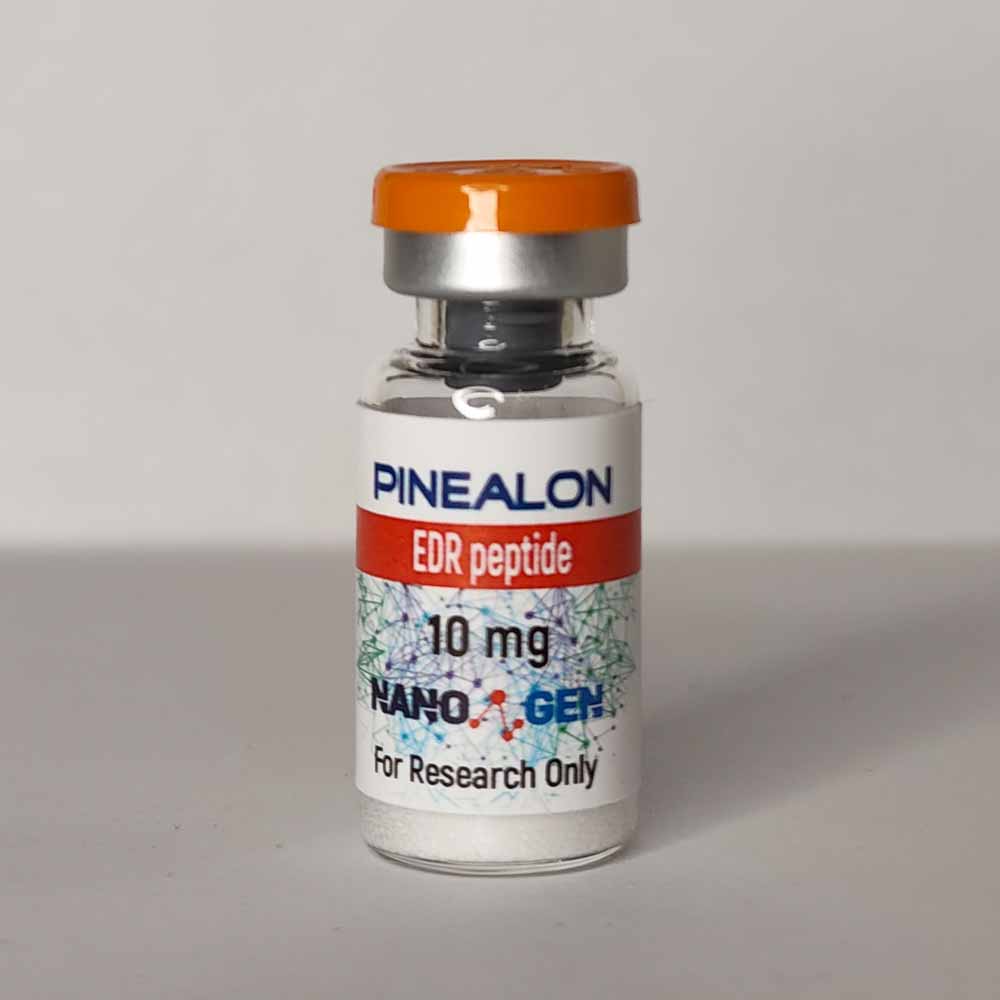
Pinealon EDR Peptide: Detailed Description
Pinealon EDR Peptide is a synthetic short peptide composed of three amino acids: glutamic acid, aspartic acid, and arginine. In scientific and research literature, it may also be referred to as EDR peptide, where EDR represents the amino acid sequence Glu-Asp-Arg.
Pinealon belongs to the group of bioregulatory peptides studied in relation to cellular processes, nervous system function, age-related changes, and cellular resistance to stress factors. Its distinctive feature is that it is considered not as a conventional nutrient or stimulant, but as a short peptide molecule potentially capable of participating in the regulation of cellular activity at a deeper level.
The main interest in Pinealon is associated with its possible influence on nervous system cells. Nervous tissue is highly sensitive to oxidative stress, impaired energy metabolism, and age-related changes. Therefore, compounds studied in the context of neuronal protection, cellular viability, and regulation of metabolic processes are of particular interest in neurobiology and gerontology.
Pinealon should not be perceived as a universal product for improving memory, rejuvenation, or nervous system recovery. It is more accurate to describe it as an investigational bioregulatory peptide associated with the study of cellular protection, neuronal metabolism, and potential influence on processes involved in aging and cellular adaptation to stress.
One of the important areas of Pinealon research is its possible influence on oxidative stress. Oxidative stress occurs when an excessive amount of reactive oxygen species is formed in the cell and the cell’s own protective systems are unable to neutralize them effectively. This is especially important for nerve cells, as neurons have high metabolic activity and are sensitive to damage.
In research, Pinealon is considered a peptide that may be associated with supporting cellular viability under stressful conditions. This does not imply a direct “therapeutic” effect, but rather potential involvement in processes that help cells maintain a more stable functional state. For this reason, Pinealon is often mentioned in the context of neuroprotection, cellular metabolism, and age-related bioregulation.
Special attention is also given to the possible interaction of EDR peptide with mechanisms regulating gene expression. Short peptides may be studied as molecules capable of influencing protein synthesis and the activity of specific cellular programs. In the case of Pinealon, this area remains investigational, but it explains the interest in the peptide as a potential bioregulator rather than merely an amino acid combination.
It is important to understand that Pinealon is not a regular supplement for general vitality. It is a peptide compound with biological activity, so its description should be careful and scientifically accurate. Any claims about its benefits should be considered only within the framework of available research, without exaggeration or promises of guaranteed results.
Pinealon EDR Peptide is of interest because it combines several areas of modern biomedicine: the study of short peptides, neurobiology, cellular resilience, age-related changes, and the regulation of metabolic processes. Due to its small molecular structure, it is regarded as a convenient object for studying the interaction of short peptides with cellular systems.
Main Properties of Pinealon EDR Peptide
Pinealon is a short synthetic tripeptide with the sequence Glu-Asp-Arg. Due to its compact structure, it belongs to peptides studied in the context of cellular regulation and neurobiological processes.
The main areas of interest in Pinealon are related to the nervous system, cellular viability, oxidative stress, and age-related changes. In a research context, it is considered a compound that may be associated with supporting cellular resilience and the normal functioning of neuronal cells.
The potential properties of Pinealon include participation in processes that protect cells from stress factors, influence on cellular metabolism, support of neuronal activity, and a possible connection with the regulation of protein synthesis. However, these properties should not be interpreted as direct medical indications without confirmation from specific clinical data.
How Pinealon Works
The mechanism of action of Pinealon is studied in several directions. One of them is related to its possible influence on cellular resilience under oxidative stress. Under increased load, cells may face an excess of reactive oxygen species, metabolic disruption, and damage to intracellular structures. Pinealon is considered a peptide that may participate in supporting cellular balance under such conditions.
Another direction is associated with the regulation of gene expression and protein synthesis. Short peptides can interact with cellular structures and potentially influence the activity of specific biological processes. In the case of EDR peptide, this area is especially important because it allows Pinealon to be considered as a bioregulatory peptide.
Pinealon is also studied in the context of neuronal cells. The nervous system requires stable cellular metabolism, protection from damaging factors, and preservation of normal signal transmission. Therefore, peptides that may be associated with supporting neuronal viability are of interest in studies of cognitive function, aging, and neuroprotection.
What Pinealon EDR Peptide Is Studied For
Pinealon is primarily studied in areas related to the nervous system and age-related changes. Scientific interest in it is driven by its possible involvement in cellular protection, metabolic regulation, and the maintenance of the functional state of neurons.
One area of research is associated with cognitive processes. Since memory, attention, and learning depend on the condition of neuronal networks, any compounds that may potentially influence the resilience of nerve cells are of interest to neurobiology.
Another area is related to oxidative stress. Excessive formation of free radicals and reactive oxygen species can worsen cellular condition, especially during age-related changes or increased physiological load. Pinealon is considered a peptide that may be associated with the study of cellular protection mechanisms under such conditions.
Pinealon is also researched within the bioregulatory concept of short peptides. This concept considers short amino acid sequences as molecules capable of participating in the fine regulation of cellular processes.
Features of Pinealon
The main feature of Pinealon is its short structure. It consists of only three amino acids, yet it is considered a biologically active molecule. This makes it an interesting object of study, as short peptides may have specific effects that cannot be reduced to the ordinary nutritional value of amino acids.
The second important feature is the research interest in its neurobiological potential. Pinealon is often associated with topics such as cellular resilience, nervous tissue, age-related changes, and regulation of protein synthesis.
The third feature is the need for cautious interpretation. Despite interesting research directions, Pinealon cannot be described as a guaranteed product for improving memory, treating neurological diseases, or slowing aging. It is more accurate to speak about potential mechanisms and investigational use.
Important Information
Pinealon EDR Peptide is not a regular dietary supplement. It is a synthetic peptide with biological activity, so it should not be considered a universal product for self-administration.
Information about Pinealon is provided for educational purposes only. It does not replace medical consultation, diagnosis, or prescribed treatment.
Before using any peptide compounds, it is necessary to consider the individual condition of the body, the presence of chronic diseases, the use of medications, and the official status of the substance in a specific country.
FAQ: Frequently Asked Questions About Pinealon EDR Peptide
What is Pinealon?
Pinealon is a synthetic short peptide composed of three amino acids: glutamic acid, aspartic acid, and arginine. It is also called EDR peptide according to its amino acid sequence, Glu-Asp-Arg.
What does EDR peptide mean?
EDR is the abbreviated designation of the peptide’s amino acid sequence: Glu, Asp, Arg. These abbreviations correspond to glutamic acid, aspartic acid, and arginine.
What is Pinealon studied for?
Pinealon is studied in the context of neurobiology, cellular protection, oxidative stress, age-related changes, and possible regulation of gene expression. The greatest interest is associated with the nervous system and the resilience of neuronal cells.
Does Pinealon improve memory?
It is more accurate to say that Pinealon is studied in relation to cognitive processes and the condition of the nervous system. It cannot be claimed that it reliably improves memory or treats cognitive disorders without specific clinical evidence.
Is Pinealon a neuroprotective peptide?
In a research context, Pinealon is often considered a peptide with potential neuroprotective properties. However, this does not mean that it can automatically be regarded as a medicine for treating nervous system diseases.
How is Pinealon related to oxidative stress?
Oxidative stress is associated with an excess of reactive oxygen species that can damage cells. Pinealon is studied as a compound that may be associated with supporting cellular viability under stress conditions.
Is Pinealon a hormone?
No, Pinealon is not a hormone. It is a short synthetic peptide composed of three amino acids and studied as a bioregulatory molecule.
Is Pinealon the same as Epitalon?
No. Pinealon and Epitalon are different peptides with different amino acid sequences. Pinealon has the sequence Glu-Asp-Arg, while Epitalon is known as the tetrapeptide Ala-Glu-Asp-Gly.
Can Pinealon be used independently?
Independent use of peptide compounds is not recommended. Pinealon has biological activity, so any decisions related to its use should take into account medical consultation and the regulatory status of the substance.
Is Pinealon suitable for general rejuvenation?
Such a description would be incorrect. Pinealon is studied in the context of age-related processes and cellular regulation, but it should not be presented as a universal product for body rejuvenation.
How is Pinealon different from ordinary amino acids?
Pinealon is not simply a mixture of amino acids, but a short peptide sequence. Peptides may have specific biological activity that differs from the action of individual amino acids.
Why is Pinealon interesting for research?
It is of interest due to its short structure, possible connection with neuronal resilience, cellular viability, oxidative stress, and regulation of biological processes at the cellular level.