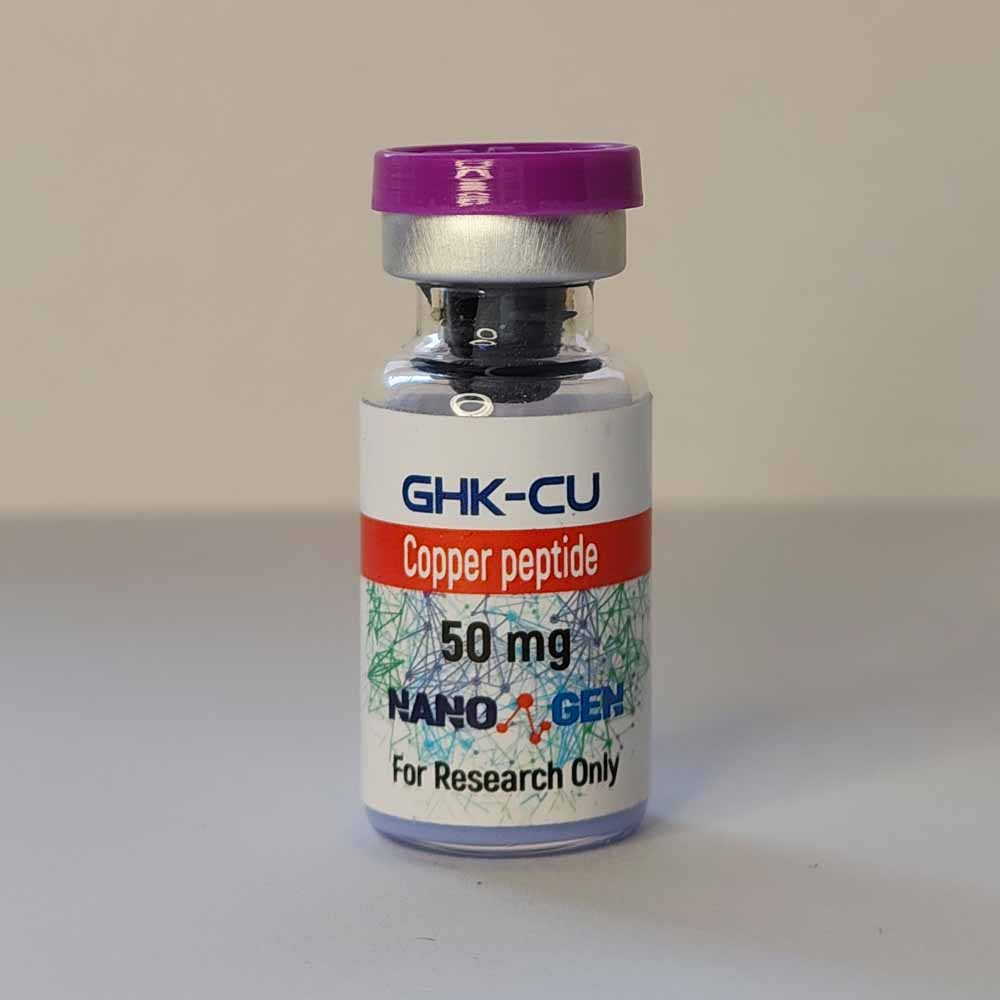
GHK-Cu
GHK-Cu is one of the most widely studied peptide complexes in modern skin biochemistry and regenerative research. This compound represents a tripeptide bound to a copper ion, forming a biologically active complex commonly referred to as the copper peptide GHK-Cu or copper tripeptide.
Scientific interest in this molecule is associated with its involvement in cellular regulation, tissue repair mechanisms, and protein synthesis processes within the skin. The GHK-Cu peptide has been investigated for its potential role in supporting structural integrity of tissues, promoting cellular renewal, and contributing to what is often described in dermatological and cosmetic contexts as the Skin Glow effect — a visually healthier, smoother, and more radiant skin appearance.
Online searches frequently include queries such as “What is copper peptide GHK-Cu”, “GHK-Cu buy”, “GHK-Cu dosage”, “GHK-Cu how to use”, “GHK-Cu peptide how to inject”, and “GHK-Cu reviews”. These search patterns reflect the growing attention this compound receives among researchers, dermatology specialists, and individuals interested in peptide technologies.
What is Copper Peptide GHK-Cu
GHK-Cu is a complex composed of the naturally occurring tripeptide glycyl-histidyl-lysine (GHK) combined with a copper ion (Cu²⁺). The peptide fragment acts as a biological carrier, while copper functions as an active element involved in multiple enzymatic and cellular reactions.
The tripeptide GHK was originally identified in human plasma and later found in other biological fluids such as saliva and urine. Its ability to bind copper and transport it to tissues attracted significant scientific interest because copper is an essential trace element involved in connective tissue formation, antioxidant defense systems, and cellular regeneration processes.
The GHK-Cu complex can interact with cellular receptors and biochemical signaling pathways, potentially influencing gene expression related to tissue repair, extracellular matrix production, and cellular homeostasis.
Biological Role of the GHK-Cu Peptide
The GHK-Cu peptide is often described as a regulator of cellular activity. Through interactions with signaling pathways and enzyme systems, the molecule may influence regeneration processes, tissue remodeling, and structural maintenance within the skin.
One of the central roles of this copper peptide involves transporting bioavailable copper to cells. Copper is required for numerous enzymatic reactions, including those responsible for collagen production, antioxidant enzyme activation, and structural protein synthesis.
By facilitating copper delivery and influencing biochemical signaling networks, GHK-Cu may contribute to multiple biological processes that support tissue maintenance and cellular repair.
Stimulation of Collagen Synthesis
One of the most discussed effects of GHK-Cu involves its influence on collagen synthesis. Collagen is the primary structural protein of the skin, responsible for maintaining elasticity, firmness, and mechanical strength.
Copper peptides may stimulate fibroblasts — specialized connective tissue cells responsible for producing collagen and elastin fibers. Through signaling pathways associated with the GHK-Cu complex, fibroblasts can increase the synthesis of structural proteins that support the extracellular matrix.
Enhanced collagen production contributes to improved dermal density and structural organization. Over time, these processes may influence the overall texture and firmness of the skin.
Influence on Tissue Regeneration
Another important area of research regarding GHK-Cu concerns its role in tissue regeneration. The peptide complex may activate cellular mechanisms involved in tissue repair, including cell migration, extracellular matrix formation, and cellular renewal.
These processes are essential for restoring damaged tissues and maintaining the structural balance of the skin. Through activation of regenerative pathways, the GHK-Cu peptide may support the natural recovery mechanisms of biological tissues.
Some studies also suggest that GHK-Cu may influence angiogenesis — the formation of new blood vessels. This process can improve nutrient delivery and oxygen supply to tissues, supporting cellular metabolism and repair mechanisms.
Antioxidant Activity
The GHK-Cu copper peptide is also associated with antioxidant defense mechanisms within cells. Antioxidant systems are essential for protecting tissues against oxidative stress caused by reactive oxygen species.
Free radicals are generated during metabolic activity and through environmental exposure such as ultraviolet radiation and pollution. Excessive oxidative stress can damage cellular components and contribute to premature aging of the skin.
Research indicates that GHK-Cu may participate in activating antioxidant enzymes and protective cellular pathways that help neutralize reactive oxygen molecules and maintain biochemical balance within tissues.
Support of the Skin Glow Effect
In cosmetic science, the term Skin Glow describes a visual condition where skin appears brighter, smoother, and more evenly toned. This effect is often associated with improved skin texture, balanced hydration, and active cellular renewal.
The GHK-Cu peptide may indirectly support this appearance by influencing processes related to cellular turnover and structural protein synthesis. When skin maintains healthy regeneration dynamics and adequate extracellular matrix composition, its surface may appear more uniform and radiant.
These mechanisms contribute to the aesthetic outcome frequently described as enhanced skin vitality or glow.
GHK-Cu How to Use
Search queries such as “GHK-Cu how to use” are common among individuals researching peptide technologies. In research and cosmetic applications, the molecule may appear in different formulations depending on the intended context.
Common formats include:
- topical serums and cosmetic formulations;
- laboratory research solutions;
- formulated peptide complexes used in professional cosmetic protocols.
Specific usage conditions depend on the product formulation, concentration, and intended research or cosmetic purpose.
GHK-Cu Dosage
The topic of GHK-Cu dosage is often discussed in research publications and technical literature. Concentrations can vary depending on the formulation type, application method, and experimental objectives.
In cosmetic products, concentrations are typically optimized to maintain peptide stability while supporting biological activity within the formulation.
Any application protocol must consider formulation specifications, manufacturer guidelines, and professional supervision where applicable.
GHK-Cu Peptide How to Inject
Some online searches include queries such as “GHK-Cu peptide how to inject”. It is important to note that peptide administration methods may differ significantly depending on the formulation and intended use.
Any injectable procedures must only be performed by qualified medical professionals and within established clinical or research protocols to ensure safety and regulatory compliance.
GHK-Cu Reviews and Growing Interest
Online discussions related to GHK-Cu reviews reflect increasing interest in copper peptide technologies. Users and professionals frequently discuss the biochemical properties of the compound and its potential role in skin-related research.
These discussions often focus on aspects such as skin texture improvement, structural support of the dermal matrix, and enhanced appearance of skin vitality.
However, ongoing scientific research continues to explore the full range of biological mechanisms associated with the GHK-Cu copper peptide.
GHK-Cu Buy and Interest in Copper Tripeptide
Search queries such as “GHK-Cu buy” and “buy copper tripeptide” appear frequently in search engines. This reflects the broader growth of interest in peptide-based compounds and molecular technologies associated with skin biology and regenerative research.
When users visit product pages, they typically seek detailed descriptions explaining the molecular properties, biological characteristics, and potential mechanisms associated with the compound. For this reason, a comprehensive description of GHK-Cu should provide structured information about its properties and biological significance.
Conclusion
GHK-Cu represents one of the most intriguing peptide complexes studied in the context of regenerative biology and skin biochemistry. The combination of a biologically active tripeptide and copper ion allows this molecule to participate in multiple cellular processes including collagen synthesis, antioxidant protection, and tissue regeneration.
Growing public and scientific interest is reflected in search queries such as “What is copper peptide GHK-Cu”, “GHK-Cu how to use”, “GHK-Cu dosage”, and “GHK-Cu reviews”. As research progresses, understanding of this peptide complex continues to expand, forming an increasingly detailed information cluster within peptide science and dermatological research.
FAQ – GHK-Cu: purchase, delivery and usage
1. What is GHK-Cu?
GHK-Cu is a copper tripeptide composed of the amino acids glycine, histidine and lysine bound to a copper ion. The compound is studied in skin biochemistry and regenerative biology.
2. Where can I buy GHK-Cu?
GHK-Cu can be purchased through specialized scientific and research suppliers that provide peptides for laboratory and research purposes.
3. Is GHK-Cu delivery available?
Yes, GHK-Cu delivery is usually available to many European countries and can be carried out by courier services or international postal delivery.
4. Can GHK-Cu be purchased with delivery to major European cities?
Yes, delivery is possible to major EU cities including Berlin, Paris, Milan, Madrid and Warsaw.
5. Is GHK-Cu delivery available in Poland?
Delivery is available throughout Poland including Warszawa, Kraków, Łódź, Wrocław and Poznań.
6. Can I order GHK-Cu with delivery to Germany?
Yes, delivery is available to major German cities: Berlin, Hamburg, Munich, Cologne and Frankfurt.
7. Is GHK-Cu delivered to Italy?
Yes, delivery is available to major Italian cities including Rome, Milan, Naples, Turin and Palermo.
8. Is GHK-Cu delivery available in Hungary?
Supplies are available throughout Hungary including Budapest, Debrecen, Szeged, Miskolc and Pécs.
9. Can GHK-Cu be ordered in Romania?
Yes, delivery is available in major Romanian cities including Bucharest, Cluj-Napoca, Timișoara, Iași and Constanța.
10. Is GHK-Cu delivered to the Czech Republic?
Yes, delivery is available throughout the Czech Republic including Prague, Brno, Ostrava, Plzeň and Liberec.
11. Can GHK-Cu be purchased in Slovakia?
Delivery is available to major Slovak cities including Bratislava, Košice, Prešov, Žilina and Banská Bystrica.
12. Is GHK-Cu delivered to Ukraine?
Yes, delivery is available to major Ukrainian cities including Kyiv, Kharkiv, Odesa, Dnipro and Lviv.
13. Is GHK-Cu delivery available across the EU?
Yes, delivery is available across the European Union including major cities such as Berlin, Paris, Milan, Madrid and Warsaw.
14. How long does GHK-Cu delivery take?
Delivery times depend on the country and courier service but typically range from several days to two weeks.
This material is provided for informational and educational purposes only and does not constitute medical advice or clinical guidance.