
LL-37 (Cathelicidin Antimicrobial Peptide, CAMP)
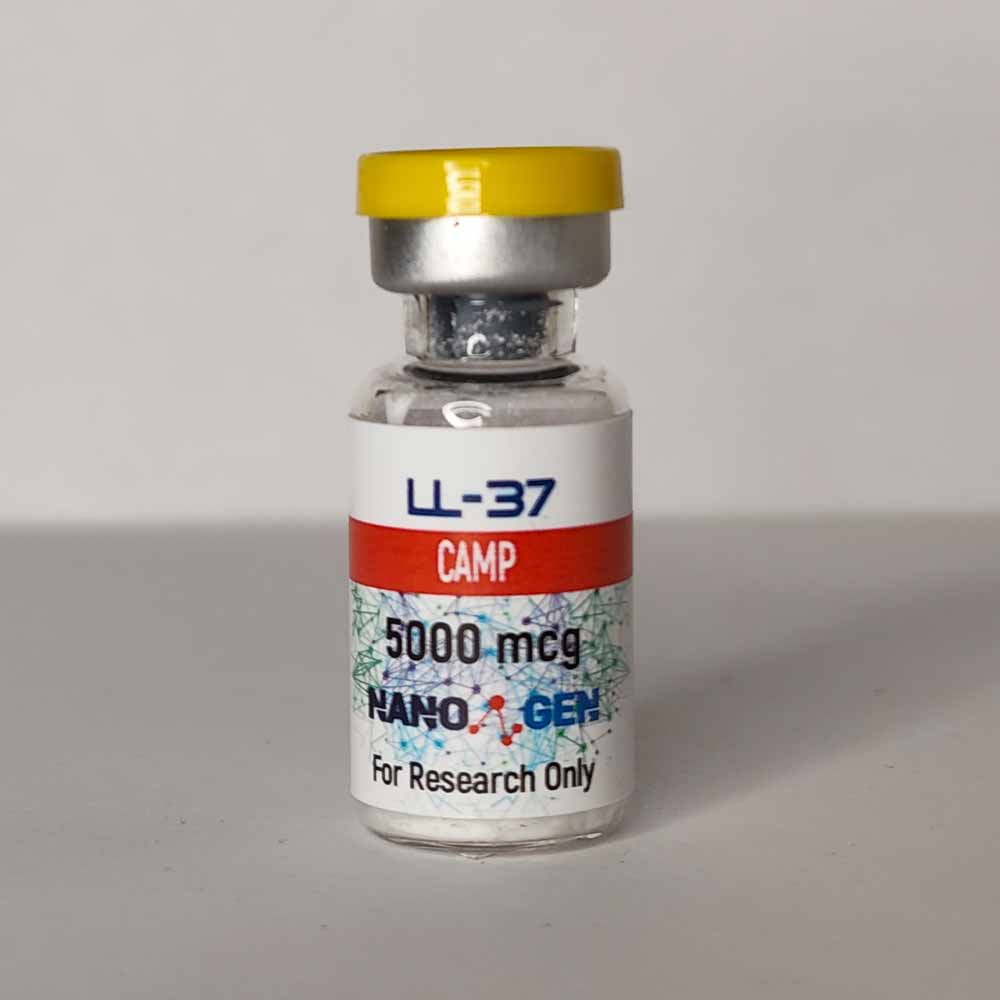
LL-37 peptide is an artificially synthesized analogue of the natural human antimicrobial peptide that is of interest to scientists because of its unique biological properties, which are useful for a wide range of scientific research applications. The LL-37 antimicrobial peptide belongs to the cathelicidin family and has the status of a peptide that is actively studied in the fields of cell biology, regenerative medicine, and fundamental research into the mechanisms of innate immunity and immunology. In the human body, LL-37 is the only known cathelicidin.
The LL-37 antimicrobial peptide has the ability to interact with cell membranes, participate in the regulation of the immune response, and directly influence processes associated with tissue repair. Every day, more and more scientific publications studying LL-37 peptide appear on the Internet, covering topics related to mechanisms of inflammation, cell signaling, antimicrobial activity, and the body's natural defense. Despite the large number of studies, many properties of LL-37 continue to remain the subject of scientific research.
In recent years, interest in LL-37 has grown significantly. It is used in research projects related to the study of cell interactions, innate immunity factors, and regeneration processes. Thanks to these characteristics, the peptide occupies an important place among modern research compounds used in laboratory practice.
The original LL-37 presented here is intended exclusively for scientific research use. The main advantages of purchasing LL-37 are, first of all, high quality, competitive pricing, various payment methods, and fast order processing. With us, it is quick and convenient to buy LL-37 with delivery, and you can place your order in just a few minutes.
LL-37, also known as Cathelicidin antimicrobial peptide or CAMP, is a biologically active peptide studied in the context of innate immunity, antimicrobial defense, inflammatory processes, and tissue repair. It belongs to the group of protective peptides of the body and is considered one of the important molecules involved in the first line of immune response.
The main interest in LL-37 is related to the fact that this peptide is not limited to antimicrobial activity alone. It is often described as a multifunctional molecule that may participate in tissue defense, regulation of immune signals, the response of skin and mucous membranes to damage, and processes associated with restoration of the epithelial barrier.
LL-37 is the active form of human cathelicidin. In the body, it is formed from the precursor protein hCAP-18, which is encoded by the CAMP gene. After enzymatic processing, the active LL-37 fragment is released, consisting of 37 amino acids. This is the form most often mentioned in scientific studies devoted to antimicrobial peptides and innate immune defense.
Cathelicidins are a family of protective peptides present in different species of living organisms. In humans, LL-37 is the main and most studied representative of this group. This makes it an especially important object for studying the immune system, skin barrier, mucous membranes, and the body’s response to microbial load.
One of the key features of LL-37 is its ability to interact with microbial membranes. Due to its positively charged and amphiphilic structure, it can bind to the surface of bacteria and influence the stability of their membranes. This mechanism explains why LL-37 is studied as one of the peptides involved in the body’s natural antimicrobial defense.
At the same time, LL-37 cannot be accurately described as a conventional antibiotic. Unlike classic antibacterial substances, it is a natural molecule of innate immunity and may participate not only in direct interaction with microorganisms, but also in regulation of the immune response. Therefore, it is more accurate to describe LL-37 as a protective peptide of the body rather than simply as an antimicrobial agent.
LL-37 is studied in connection with bacteria, viruses, fungi, and biofilms. Biofilms are resistant microbial communities that can form on surfaces and complicate the normal protective response of tissues. Interest in LL-37 in this area is related to its possible influence on microbial adhesion, biofilm structure, and the interaction of microorganisms with the body’s cells.
LL-37 is especially significant for the skin and mucous membranes. These tissues constantly interact with the external environment, microorganisms, mechanical damage, and inflammatory factors. LL-37 is found in epithelial tissues and immune cells, which is why it is considered one of the participants in the local protective response.
In the skin, LL-37 may be associated with maintaining barrier function, response to damage, and regulation of the inflammatory response. However, its role is not one-dimensional. In some conditions, it may support protective mechanisms, while in others it may be associated with excessive inflammatory activity. This is why the description of LL-37 should remain balanced and cautious.
Another area of research is related to tissue repair. LL-37 is studied in the context of cell migration, epithelial response, angiogenesis, and processes involved in healing and restoration of barrier structures. This makes it interesting for research on skin, mucous membranes, and tissue regeneration.
It is important to understand that LL-37 should not be presented as a guaranteed means for wound healing, infection treatment, or inflammation reduction. It is more appropriate to say that it is studied as a peptide associated with mechanisms of innate defense, tissue response, and immune regulation.
The immunomodulatory properties of LL-37 make it especially interesting for modern biomedicine. It may interact with immune cells, influence the release of signaling molecules, and participate in attracting immune cells to the site of damage or microbial load. This broad spectrum of activity explains why LL-37 is often classified as a host defense peptide.
LL-37 can be described as a peptide located at the intersection of several important processes: antimicrobial defense, inflammation, immune communication, skin barrier function, and tissue repair. Its scientific value lies not in one single effect, but in its ability to participate in a complex system of interactions between microbes, immune cells, and body tissues.
Main Properties of LL-37
LL-37 belongs to antimicrobial peptides of innate immunity. It is the active form of human cathelicidin and is formed from the precursor protein hCAP-18, encoded by the CAMP gene.
One of the main properties of LL-37 is its interaction with microbial membranes. Due to its structure, the peptide can bind to the surface of certain microorganisms and disrupt the stability of their membranes. This property makes it an important object of research in the field of natural antimicrobial defense.
The second important property is immunomodulatory activity. LL-37 may be associated with regulation of inflammatory signals, immune cell activity, chemotaxis, and the local tissue response to damage.
The third property is participation in epithelial and tissue response. LL-37 is studied in the context of skin, mucous membranes, barrier restoration, and processes that help tissues respond to damaging factors.
How LL-37 Works
The mechanism of action of LL-37 is studied in several directions. The first is related to direct contact with microorganisms. The peptide may interact with bacterial membranes, alter their structure, and influence the viability of certain microbial cells.
The second direction is related to the immune system. LL-37 may participate in regulating immune cell activity and influence signaling molecules that shape inflammatory and protective responses. Because of this, it is viewed not only as an antimicrobial peptide, but also as a molecule of immune communication.
The third direction is related to tissue repair. In research, LL-37 is considered a peptide that may be involved in cell migration, epithelial restoration, and tissue response to damage.
The action of LL-37 depends on context. Its activity may be influenced by tissue type, peptide concentration, presence of inflammation, microbial load, and the overall state of the immune system. Therefore, it cannot be described as a molecule with the same action under all conditions.
Why LL-37 Is Studied
LL-37 is studied primarily in the context of innate immunity. It helps researchers understand how the body responds to contact with bacteria, viruses, fungi, and other external factors at the level of the first line of defense.
One of the main research areas is related to antimicrobial activity. LL-37 is considered a peptide that may interact with various microorganisms and participate in the natural protection of tissues.
Another area is related to inflammatory processes. Since LL-37 may influence immune signals, it is studied in the context of inflammation, skin reactions, and disturbances of immune balance.
LL-37 is also researched in the field of tissue repair. Its possible connection with cell migration, epithelial restoration, and healing makes it an important object for studying tissue response.
The influence of LL-37 on biofilms is also of particular interest. Such microbial structures may be more resistant to external effects, so peptides capable of influencing their formation and stability are actively studied in modern microbiology.
LL-37 and Innate Immunity
Innate immunity is the body’s first defense system, responding quickly and non-specifically. LL-37 is part of this system and may participate in the early response to microbial load, tissue damage, and inflammatory signals.
Its significance lies not only in direct interaction with microorganisms. LL-37 may influence the recruitment of immune cells, local signaling processes, and coordination of the protective response.
This is why LL-37 is often called not simply an antimicrobial peptide, but a host defense peptide. This term better reflects its multifunctionality and its participation in broader immune regulation.
LL-37 and Skin
The skin is one of the main areas where LL-37 attracts scientific interest. It constantly interacts with microbes, ultraviolet radiation, mechanical damage, pollution, and inflammatory factors. Therefore, molecules of innate defense are highly important for maintaining the normal condition of the skin barrier.
LL-37 may be associated with the protective response of the skin, epithelial restoration, and regulation of local inflammation. In studies, it is considered one of the factors involved in the skin’s response to damage and microbial exposure.
However, it is important to consider that LL-37 activity in the skin may vary. Under normal regulation, it participates in defense, but under certain conditions it may be associated with an excessive inflammatory response. Therefore, its role in skin processes requires cautious interpretation.
LL-37 and Tissue Repair
LL-37 is studied in connection with tissue repair processes. In scientific contexts, it is associated with cell migration, epithelial regeneration, angiogenesis, and tissue response to damage.
This interest is explained by the close connection between immune defense and tissue repair. When tissue is damaged, the body must not only control microbial load but also activate repair mechanisms. LL-37 may be one of the participants in this complex coordination.
At the same time, LL-37 cannot be accurately described as a guaranteed means of accelerating healing. It is more correct to say that it is studied in the context of repair mechanisms, epithelial response, and regulation of tissue processes.
LL-37 and Biofilms
Biofilms are microbial communities that can form on various surfaces and show increased resistance to external influences. They are of interest to microbiology, immunology, and antimicrobial defense research.
LL-37 is studied in connection with its possible influence on biofilm formation, microbial adhesion, and interaction of microorganisms with body tissues. This area is important because biofilms may complicate the normal immune response and reduce the sensitivity of microbial communities to protective factors.
However, this remains a research area, and LL-37 should not be described as a ready-made universal solution against biofilms. It is more appropriate to speak about its potential role in studying the interaction between microbes and the immune system.
Features of LL-37
The main feature of LL-37 is multifunctionality. It is associated with antimicrobial activity, immune regulation, inflammation, barrier function, and tissue repair.
The second feature is its endogenous origin. LL-37 is a natural human peptide and the active form of cathelicidin encoded by the CAMP gene.
The third feature is the dependence of its action on biological context. The same peptide may show different properties depending on tissue condition, inflammation level, microbial load, and immune environment.
The fourth feature is high research interest. LL-37 is considered an important model molecule for studying antimicrobial peptides, host defense peptides, innate immunity, and interaction between the body and microorganisms.
Important Information
LL-37 Cathelicidin antimicrobial peptide is a biologically active peptide associated with immune regulation and antimicrobial defense. It is not an ordinary dietary supplement and should not be considered a universal product for independent use.
Information about LL-37 is provided for educational purposes and does not replace medical consultation, diagnosis, or prescribed treatment.
Any decisions related to substances that affect the immune system, inflammation, or microbial defense should take into account medical supervision, the individual condition of the body, and the official regulatory status of the substance in a specific country.
FAQ: Frequently Asked Questions About LL-37
What is LL-37?
LL-37 is a human antimicrobial peptide, the active form of cathelicidin, associated with innate immunity, tissue defense, inflammation, and immune regulation.
What does CAMP mean?
CAMP stands for Cathelicidin antimicrobial peptide. It is the gene that encodes the precursor protein of human cathelicidin, from which the active peptide LL-37 is formed.
Why is LL-37 called a cathelicidin?
LL-37 belongs to the cathelicidin family — protective peptides involved in the innate immune system. In humans, LL-37 is the main active form of cathelicidin.
Is LL-37 an antibiotic?
LL-37 has antimicrobial activity, but it is not accurate to describe it as a conventional antibiotic. It is an endogenous peptide of innate immunity that is also associated with immune modulation, inflammation, and tissue response.
How does LL-37 act on bacteria?
LL-37 may interact with microbial membranes, bind to their surface, and disrupt membrane stability. This mechanism is studied as one of the ways of natural antimicrobial defense.
Does LL-37 act only on bacteria?
No. LL-37 is studied not only in relation to bacteria, but also in the context of viruses, fungi, biofilms, inflammation, and immune regulation. However, its action depends on specific conditions.
Is LL-37 connected with immunity?
Yes. LL-37 is part of innate immunity and may participate in the regulation of immune cells, inflammatory signals, and the protective response of tissues.
Does LL-37 help with healing?
LL-37 is studied in connection with tissue repair processes, cell migration, epithelial response, and healing. However, it should not be described as a guaranteed means for wound healing.
Is LL-37 connected with skin?
Yes. LL-37 is of great interest in skin research because the skin is an important barrier organ. It may be associated with epithelial defense, inflammatory response, and restoration of the skin barrier.
Does LL-37 affect biofilms?
LL-37 is studied in the context of biofilms, microbial adhesion, and interaction of microorganisms with tissues. However, this is a research direction, not a basis for promising a specific antimicrobial result.
Is LL-37 always beneficial?
No. LL-37 participates in protective processes, but its activity depends on context. Under certain conditions, it may be associated with an excessive inflammatory response, so its action cannot be described as one-dimensional.
Can LL-37 be used independently?
Independent use of biologically active peptides that affect the immune system and inflammation is not recommended. Any decisions should take into account medical consultation and the regulatory status of the substance.