
GHRP 6
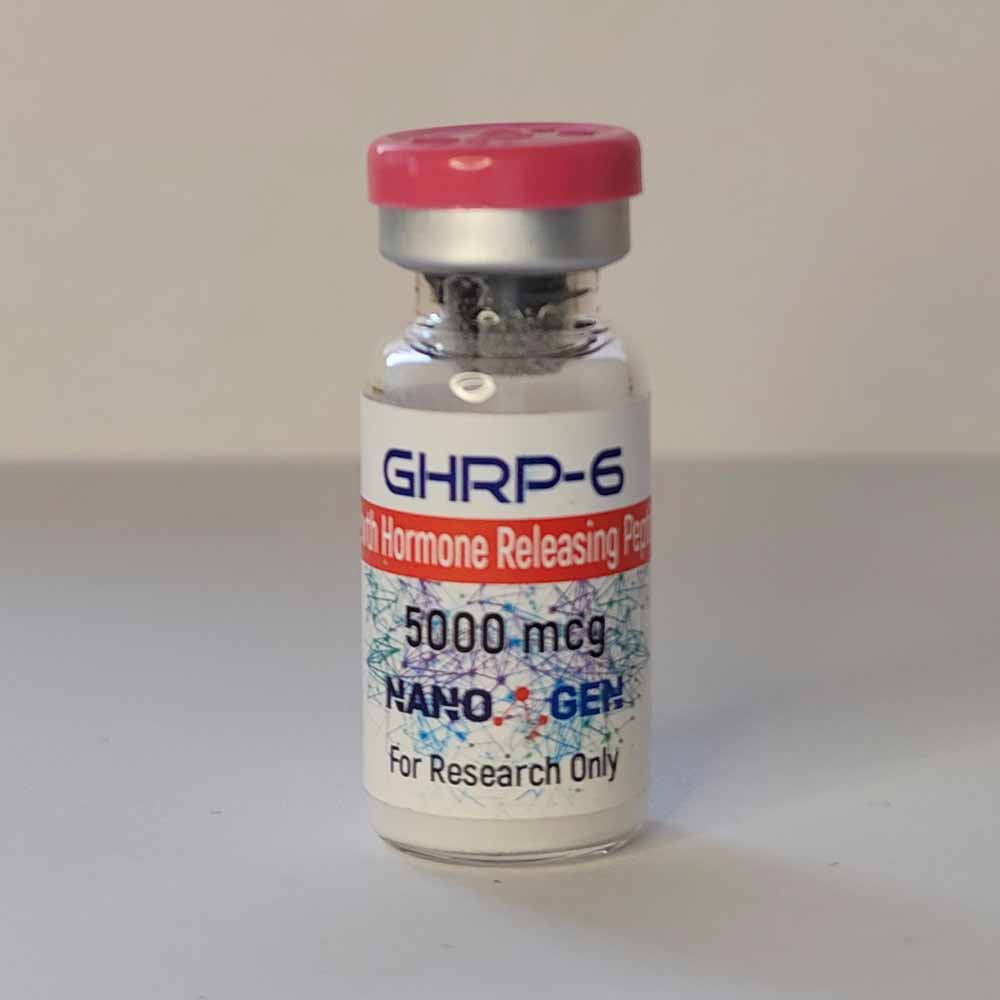
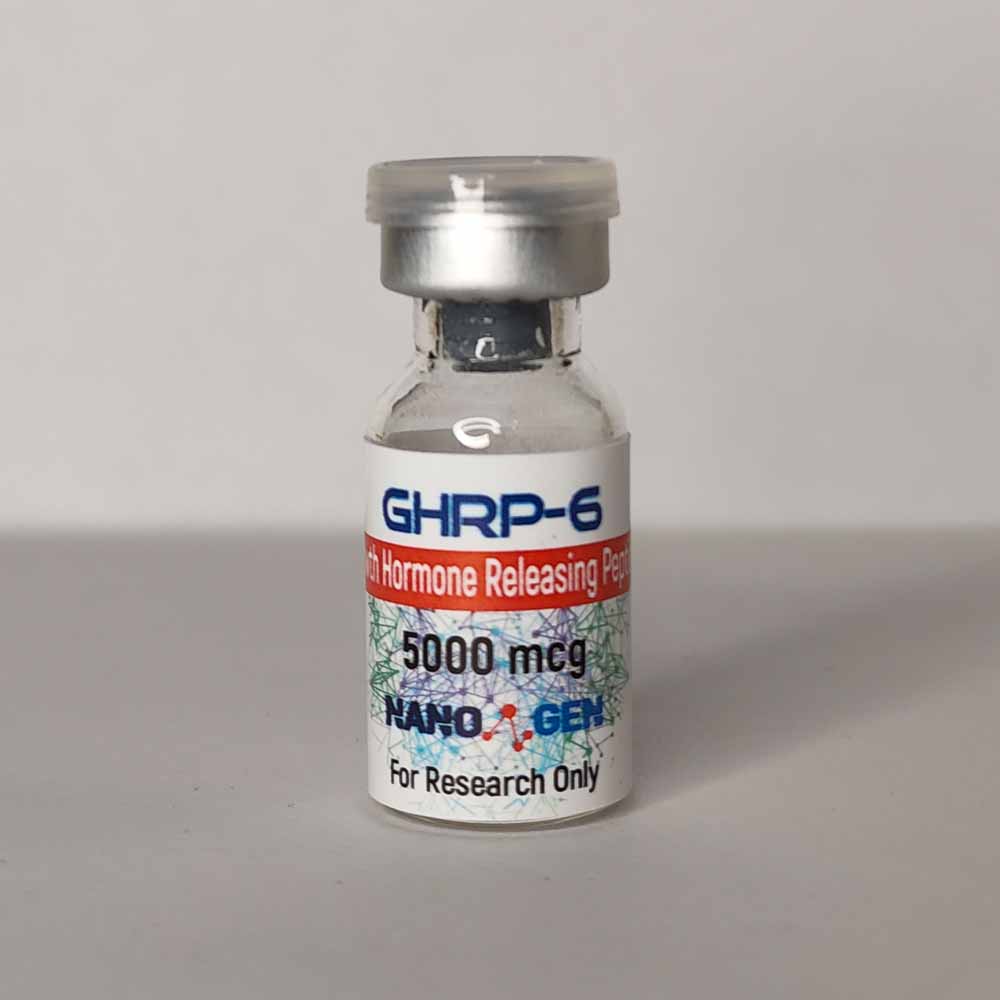
GHRP-6: The Peptide That Initiates Dialogue with the Hormonal System
GHRP-6 is a synthetic peptide belonging to the group of growth hormone releasing peptides, meaning peptides capable of stimulating the release of growth hormone. Its key feature is that it is not growth hormone itself. It works differently: it does not replace the hormone externally but acts on specific receptor mechanisms through which the body can enhance its own pulsatile secretion of growth hormone.
That is why GHRP-6 is often considered not as direct hormonal therapy, but as a tool to influence the endocrine axis, involving the pituitary gland, hypothalamus, the ghrelin system, and the body’s metabolic signals.
What Makes GHRP-6 Special
The primary interest in GHRP-6 lies in its ability to activate a system similar to the action of ghrelin. Ghrelin is often called the “hunger hormone,” but this definition is too narrow. In fact, ghrelin participates not only in appetite regulation but also in energy metabolism, feeding behavior, carbohydrate metabolism, and the stimulation of growth hormone secretion.
Therefore, GHRP-6 is interesting as a compound at the intersection of multiple areas: hormonal regulation, recovery, nutrition, metabolism, and the body’s adaptation to stress.
Why GHRP-6 Should Not Be Seen as “Just a Growth Peptide”
A common mistake is to view GHRP-6 solely through the lens of muscle growth or athletic performance. This perspective oversimplifies the matter. Growth hormone is not only about muscles. It is involved in tissue repair, protein, fat, and carbohydrate metabolism, connective tissue health, stress adaptation, recovery processes, and overall metabolic balance.
Thus, any substance affecting growth hormone secretion potentially impacts not a single function, but an entire system of interconnected processes.
GHRP-6 is interesting because it acts not linearly, but through a regulatory network. It can enhance hormonal pulses, but the response depends on the state of the body: age, nutrition, sleep, stress level, receptor sensitivity, baseline hormonal profile, and overall metabolic status.
Consequently, the response to such compounds cannot be identical for everyone. In one person, the main noticeable effect may be increased appetite, in another recovery, in a third altered energy or mood, and in some, there may be no noticeable effect at all.
Mechanism of Action: Through the Ghrelin System and Pituitary Gland
To understand GHRP-6 more deeply, it is important to examine its mechanism. This peptide is associated with activation of receptors sensitive to growth hormone secretagogues. One key receptor is GHS-R1a, through which ghrelin and related compounds act.
Activation of these receptor pathways can enhance growth hormone release by the pituitary gland. GHRP peptides may also act synergistically with GHRH, meaning under certain conditions their effect can complement the natural signals that trigger growth hormone secretion.
This fundamentally distinguishes GHRP-6 from direct growth hormone administration. With direct administration, the body receives ready-made hormone externally. Using a secretagogue sends a signal that must pass through the body’s own regulatory mechanisms.
Theoretically, this approach is more “physiological,” but that does not make it automatically safe. Any intervention in the hormonal axis can have consequences, as the endocrine system operates on principles of balance, feedback, and adaptation.
GHRP-6 and Appetite
One of GHRP-6’s most well-known features is its potential to increase appetite. This is because its mechanism of action overlaps with the ghrelin system. Ghrelin is involved in the sensation of hunger, food motivation, and energy behavior.
Therefore, GHRP-6 often draws interest in contexts such as mass gain, recovery after depletion, increasing food intake, or situations where it is difficult for a person to consume enough calories.
However, there is an important nuance. Appetite is not simply the desire to eat; it is a complex neuroendocrine process influenced by glucose, insulin, leptin, stress, sleep, emotional state, and eating habits.
If a substance increases appetite, it may be beneficial in some contexts and undesirable in others. For someone with low body mass, this could be a plus. For someone with insulin resistance, carbohydrate metabolism issues, or a tendency to overeat, this effect could be problematic.
Therefore, GHRP-6 cannot be evaluated solely by the principle “increases appetite — therefore helpful.” In biology, few effects are purely good or bad. There is the effect, the context, and the cost of intervention.
Recovery, Tissues, and Anabolic Background
Interest in GHRP-6 is also linked to its potential impact on recovery processes. Growth hormone and related mechanisms participate in protein metabolism, tissue regeneration, and adaptation to stress.
That is why peptides in this group are often discussed in sports, rehabilitation, and anti-aging contexts.
However, it is important to separate scientific interest from marketing claims. GHRP-6 is often portrayed too simplistically as “accelerates recovery,” “builds muscles,” “rejuvenates,” or “burns fat.” In practice, such statements are overly crude.
Real biological effects depend on many factors. Growth hormone does not act in isolation: its effects are related to IGF-1, nutrition, insulin levels, liver function, sleep quality, training load, and overall body condition.
Therefore, it is more accurate to say: GHRP-6 may be interesting as a substance capable of affecting growth hormone regulation and related metabolic processes. But this does not guarantee a specific external result, such as rapid muscle gain or noticeable rejuvenation.
GHRP-6 and Metabolism
The ghrelin system is linked not only to appetite but also to energy metabolism. Ghrelin participates in regulating feeding behavior, energy balance, and carbohydrate metabolism. Thus, compounds affecting this system cannot be considered separately from glucose, insulin, and overall metabolic status.
This is especially important for people with insulin sensitivity issues, blood sugar fluctuations, overweight, thyroid disorders, liver problems, or other endocrine disruptions. In such cases, interfering with the growth hormone and ghrelin system can have unpredictable consequences.
Even if a person subjectively feels increased appetite or energy, it does not mean the metabolic process is proceeding safely.
That is why medical supervision is not just formal but essential. Before any intervention in hormonal regulation, it is logical to assess baseline markers: glucose, insulin, lipid profile, liver function, thyroid, IGF-1, and other parameters deemed necessary by a physician.
Difference Between GHRP-6 and Other Peptides in the Group
GHRP-6 is often compared to GHRP-2, ipamorelin, hexarelin, and other growth hormone secretagogues. Their general idea is similar: they can stimulate growth hormone release. Differences lie in potency, selectivity, effects on appetite, possible influence on other hormonal parameters, and individual tolerance.
GHRP-6 is usually highlighted for its pronounced link to appetite. While other peptides in this group may be considered “milder” or more selective, GHRP-6 is known for a more noticeable ghrelin-like component.
But this does not make it automatically better or worse. It makes it more suitable for some purposes and less for others.
Why There Are So Many Myths Around GHRP-6
Peptides have become popular in biohacking, sports, recovery, and aesthetic medicine. The problem is that popularity often outpaces understanding. As a result, GHRP-6 is sometimes described as a universal tool: for mass gain, rejuvenation, fat burning, joint recovery, sleep, skin, energy, or even “rebooting the body.”
This approach is risky because it turns a complex biologically active substance into a marketing symbol. GHRP-6 is not a