
AHK-Cu
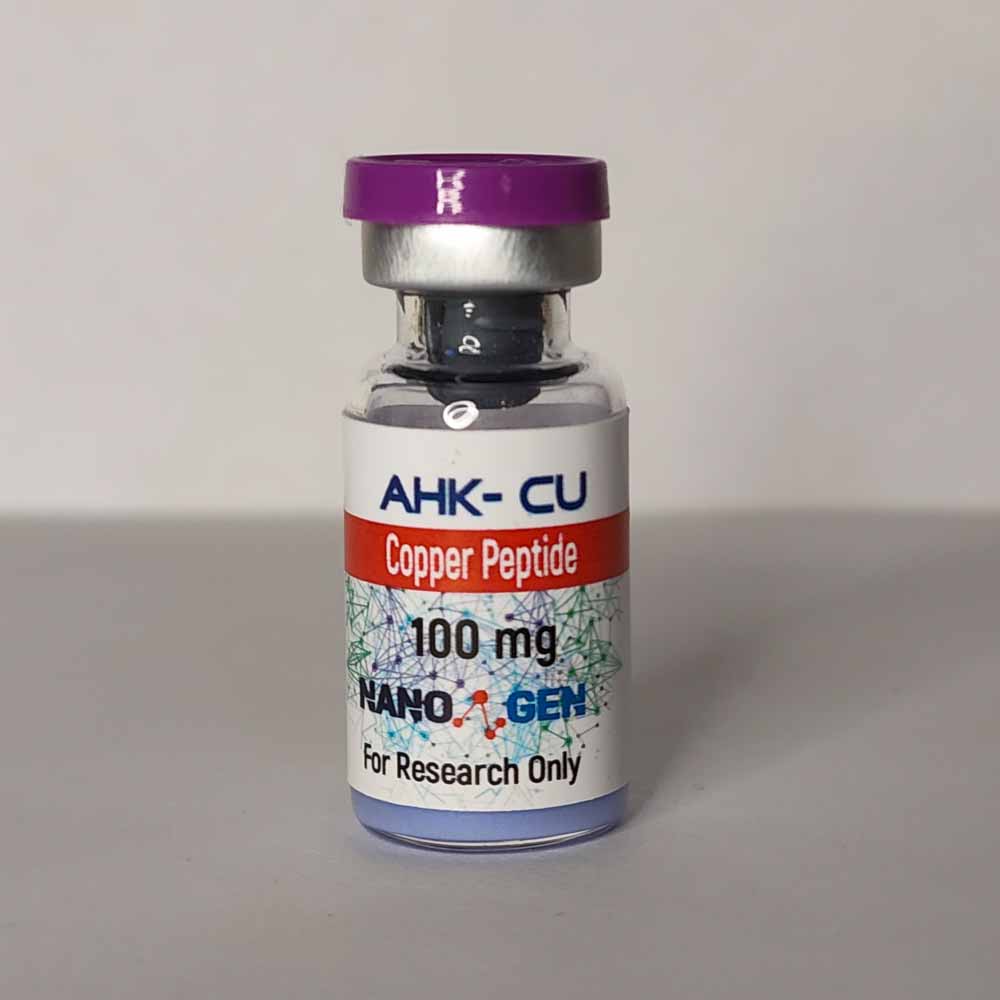
AHK-Cu: what kind of peptide it is, how it works, and why interest in it continues to grow
AHK-Cu is a copper peptide that has been discussed more and more often in recent years in the context of cosmetics, scalp care, and hair formulas. At the same time, there is still a lot of confusion surrounding this ingredient. Some call it a promising next-generation active, others confuse it with other copper peptides, and still others simply repeat marketing phrases without getting to the point. In reality, AHK-Cu truly deserves attention, but not because of loud promises. It is interesting because of its biological logic and because of how it can be viewed in light of modern ideas about the cellular activity of the skin and the hair follicle.
Simply put, AHK-Cu is a tripeptide bound to copper. This structure itself already matters. Peptides are valued in cosmetics not only for sounding modern, but also for their possible involvement in subtle signaling processes. They do not work like a rough film on the skin’s surface and do not provide only a decorative instant effect. Their role is more refined: they are viewed as molecules capable of interacting with the cellular environment, influencing its behavior, and supporting the processes on which skin condition, tissue density, and hair follicle activity depend.
What is AHK-Cu
AHK-Cu is a complex formed by the AHK peptide and a copper ion. The peptide part consists of three amino acids: alanine, histidine, and lysine. That is why it is classified as a tripeptide. In some professional descriptions and ingredient catalogs, it is also associated with the designation Copper Tripeptide-3. By its nature, it belongs to the group of copper-binding peptides and is considered an interesting active component for cosmetic and research formulas in the fields of skin and hair.
Interest in such compounds did not arise by chance. Copper plays an important role in many biological processes. It is connected with the work of various enzymes, metabolic reactions, maintenance of tissue structure, and the normal course of renewal processes. When copper is combined with a short peptide, the result is not just a chemical combination, but a potentially active system that can take part in cellular communication. This is exactly where the main interest in AHK-Cu comes from.
Why AHK-Cu is discussed primarily in the context of hair
Although copper peptides in general are often discussed in both anti-aging care and general skin care, AHK-Cu has one distinct feature: it is especially often associated specifically with hair and scalp care. The reason is that this peptide attracted attention primarily in the context of hair follicle cells, especially dermal papilla cells.
The dermal papilla is one of the key structures of the hair follicle. If explained in clear rather than academic language, it is a kind of regulatory center that helps determine how actively a hair grows, how long the growth phase lasts, and how stably the follicle itself functions. When the condition of these cells worsens, the hair may become thinner, weaker, and less dense. That is why any ingredient that demonstrates interesting properties in relation to this cellular zone immediately attracts interest in trichology and cosmetics.
For this reason, AHK-Cu is often regarded not as an abstract “youth peptide,” but as a more targeted active, particularly interesting for scalp products, hair serums, and specialized cosmetic formulas.
How AHK-Cu is perceived from a scientific perspective
The most important thing to understand about AHK-Cu is the following: it is not a magical ingredient for which everything has already been definitively proven, but neither is it an empty marketing label without substance. It lies somewhere in between. This means it is a biologically interesting peptide for which there is data worthy of attention, but this data should not be turned into a story about an instant solution to any skin or hair problem.
The main reason for interest in AHK-Cu is that in laboratory and ex vivo models it has been associated with processes important for the hair follicle. When discussing this peptide, its potential role in supporting dermal papilla cell proliferation and in forming a more favorable profile of cellular viability is often emphasized. Translated into simple language, the idea looks like this: AHK-Cu is interesting because it may be linked to supporting the cellular conditions under which the follicle can maintain its activity more easily.
This is exactly where the difference between a serious approach to the ingredient and a purely promotional one becomes clear. Advertising likes to promise “awakening dormant follicles,” “rapid hair growth,” or “complete restoration.” The scientific approach is much more restrained. It speaks about cellular activity, signaling mechanisms, viability markers, and laboratory observations. For AHK-Cu, this careful and precise approach is the most appropriate.
Properties attributed to AHK-Cu
When people talk about the properties of AHK-Cu, they usually mean several directions. First, interest in the condition of the hair follicle and the cellular environment of the scalp. Second, possible support for processes related to renewal and the maintenance of a more favorable cellular microclimate. Third, general attention to copper peptides as a category of actives that are perceived as more technological and more sophisticated than conventional surface-acting ingredients.
It is important to understand that AHK-Cu should not be described as an ingredient with one straightforward function. Its appeal is not that it supposedly delivers one effect very quickly and very strongly. On the contrary, it attracts attention precisely as a molecule with a subtler and more complex mode of action. Such actives are valued not for an instant wow effect, but for their potential to influence more complex mechanisms and indirectly change the appearance of skin and hair through cellular processes.
That is why in a competent description of AHK-Cu the emphasis should be placed not on loud promises, but on more precise wording: support, care, interest within modern cosmetic research, connection with the activity of the scalp and hair follicle, and the potential for inclusion in multi-component formulas.
AHK-Cu and other copper peptides: what is the difference
One of the most common mistakes is to equate AHK-Cu with any other copper peptide. It is especially often confused with GHK-Cu, which is much more widely known. But these are not the same substance. These compounds have different amino acid sequences, which means their biological identity does not match either. Yes, they belong to one broad category of copper peptides, but it would be wrong to mechanically transfer to AHK-Cu all the claims that have ever been made about GHK-Cu.
This kind of mixing happens very often, especially in advertising texts where everything is combined into one beautiful story. But if an article aims to be serious, it is better to avoid that. AHK-Cu should be regarded as a separate active with its own specificity, not as another name for a more famous peptide.
Why AHK-Cu is interesting to modern cosmetics
Modern cosmetics are changing. In the past, actives were expected primarily to deliver a fast and visually noticeable effect: moisturize, smooth, soften. Today attention is shifting more and more toward substances that are considered participants in cellular communication. Interest is growing in formulas that work not only on the surface, but also at the level of the tissue microenvironment. It is in this context that peptides have gained such popularity.
AHK-Cu fits this logic very well. It is interesting not because it promises miracles in a few days, but because it belongs to the category of actives that aim to work more delicately and more deeply. For the consumer this may sound less dramatic, but for the professional market and for people who truly want to understand ingredients, this approach usually looks much more convincing.
In addition, interest in AHK-Cu is strengthened by the general trend toward more complex formulas. Today it is no longer enough simply to add one high-profile ingredient and write its name in large letters on the packaging. It is far more important to create a system in which actives complement one another. In this context, AHK-Cu can be seen as part of a more thoughtfully designed composition, especially in scalp formulas, multi-component serums, and products focused on delicate yet active care.
Where AHK-Cu can be used
AHK-Cu appears most logical in cosmetic products related to scalp and hair care. These may include serums, ampoules, lotions, and other formats where the emphasis is placed not on decorative effect, but on an active formula. At the same time, it may also attract interest in the broader skin care segment, especially where manufacturers want to highlight the modern peptide character of the composition.
At the same time, it is important to avoid excessive promises. It is more accurate to speak of a promising ingredient, of its role as a modern active component, and of the fact that it attracts interest in the professional environment, rather than claiming that it single-handedly solves all problems related to skin aging or hair loss. The calmer and more competently AHK-Cu is presented, the more convincing it looks in the eyes of a reader who is already tired of overly aggressive marketing.
Advantages of AHK-Cu as a cosmetic active
If we gather the strengths of AHK-Cu in one place, we get quite an interesting profile. First, it is a modern peptide active, and the peptide category itself has long been perceived as one of the most technologically advanced in cosmetics. Second, it is a copper complex, and copper itself is associated with important biological processes. Third, AHK-Cu is interesting not as an abstract molecule, but as an ingredient that is especially often discussed in connection with the hair follicle and scalp cells.
Another advantage is its relative “freshness” in the communication field. Many actives have been used so heavily by marketing that they have lost part of their strength in the eyes of the audience. AHK-Cu has not yet turned into a completely hollowed-out advertising cliché. That is exactly why a well-written text about this ingredient can sound fresh and convincing, especially if it does not try to sell it as a miracle substance, but calmly, clearly, and humanly explains its role.
What is important to say honestly
Honesty is exactly what articles about active ingredients often lack. In the case of AHK-Cu, it is important to say directly: the interest in it is real, but it should not be turned into an absolute. Yes, it is a promising copper peptide. Yes, there is an interesting scientific context around it. Yes, it looks especially interesting in the topic of hair and scalp. But that does not mean impossible things should be promised, research should be replaced with slogans, or that properties should be attributed to it that have already been definitively and indisputably proven for all possible usage scenarios.
And this is exactly the approach that works best today. The reader has become much more attentive. They notice when a text is written from a template, when the author copies general phrases, and when the promises sound too beautiful to be true. That is why a good article about AHK-Cu should not be loud, but confident. Not overheated, but meaningful. Not similar to empty advertising, but to a text written by a person who has truly understood the subject.
Conclusion
AHK-Cu is an interesting copper tripeptide that occupies an increasingly visible place in the conversation about modern cosmetic actives. It is especially often associated with scalp care and attention to the hair follicle. Interest in it is based not on big promises, but on its biological logic, its belonging to the group of copper peptides, and its perception as an active with a more targeted and more “intelligent” profile.
To create a high-quality SEO article about AHK-Cu, it is important to maintain balance. Not to turn it into a legend, but also not to reduce everything to the banal idea of “just another ingredient.” This is an active that truly deserves attention. It fits well into the modern trend toward peptides, more complex and more thoughtfully designed formulas, interest in cellular mechanisms, and a deeper approach to skin and hair care. That is why today AHK-Cu is regarded as a modern and promising ingredient that will likely be discussed more and more often.
FAQ about AHK-Cu
What is AHK-Cu?
AHK-Cu is a copper tripeptide, that is, a complex formed by the AHK peptide and a copper ion. It belongs to the group of modern cosmetic actives that are considered in the context of skin and hair care.
What is AHK-Cu used for?
AHK-Cu is most often discussed in connection with cosmetic formulas for the scalp and hair, as well as a promising peptide active in general care.
Are AHK-Cu and GHK-Cu the same thing?
No, they are different copper peptides. They belong to the same general category, but they have different amino acid sequences and should not be considered fully interchangeable.
Why is AHK-Cu interesting in the context of hair?
Interest in AHK-Cu is connected with the fact that it is often considered in the context of the hair follicle and dermal papilla cells, which play an important role in the hair growth cycle.
Can AHK-Cu be considered a fully proven ingredient?
It is more accurate to define it as a promising and biologically interesting active. It is not an empty marketing term, but neither is it an ingredient for which all scientific questions have already been definitively closed.