
What Are Peptides in Simple Words
What Are Peptides in Simple Words
What Are Peptides in Simple Terms: Clear Explanation, Peptide Bond, and Peptide Synthesis
If you're looking for a simple explanation of what peptides are, let's start without complicated terms. Peptides are short chains of amino acids. You can think of amino acids as "building blocks" and peptides as small "structures" made from these blocks. Peptides are often compared to proteins, but the main difference lies in the length of the chain and the complexity of the structure.
What Are Peptides: A Simple Definition
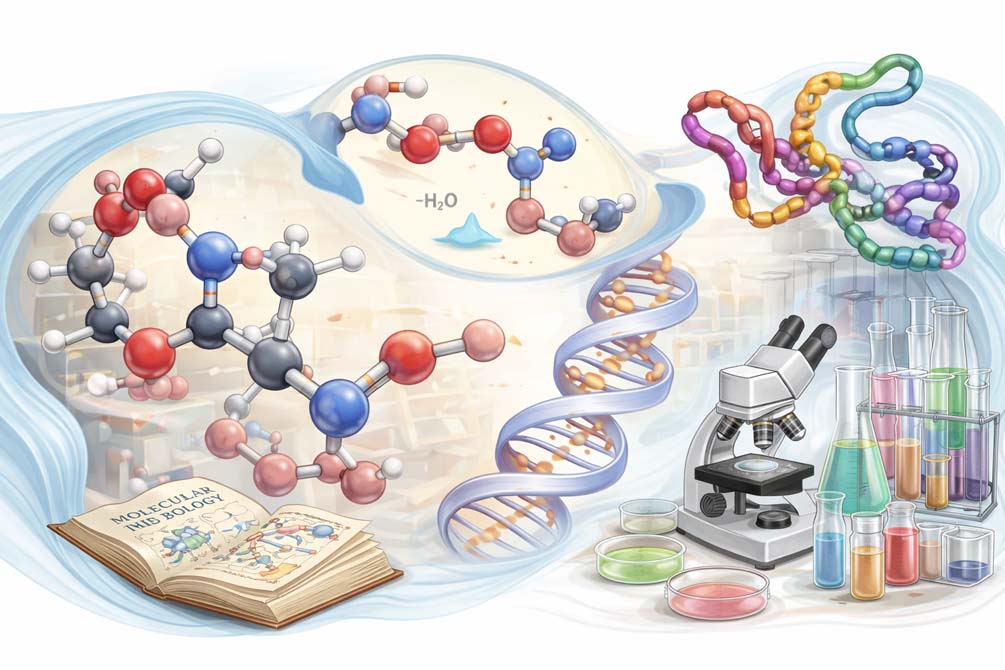
What are peptides in simple terms? They are molecules made of several amino acids linked together. The connection occurs through a peptide bond. The more amino acids in the chain, the "larger" and more complex the molecule becomes. Very long chains are usually referred to as proteins.
Peptide Bond: What It Is and Why It Matters
A peptide bond is a chemical bond that "stitches" amino acids together into a chain. It forms when one amino acid connects to another, creating a shared "bridge" between them. The peptide bond is essential for the existence of peptides and proteins: without it, amino acids would remain separate molecules instead of forming chains.
- Peptide bonds link amino acids into a single chain.
- The sequence of amino acids determines the properties of the peptide.
- The longer the chain, the closer the molecule’s complexity is to that of a protein.
Peptides vs. Proteins: What’s the Difference?
Peptides and proteins are built on the same principle: amino acids + peptide bonds. The difference is in scale. Peptides are usually shorter and simpler, while proteins often have very long chains and complex three-dimensional structures. This complexity allows proteins to perform a wide range of functions, whereas peptides often act specifically and "quickly," functioning as signaling molecules.
Why Peptides Matter: Their Role in Biology
Despite their small size, peptides can participate in regulating biological processes. In biology, peptides are often considered "messenger molecules" because they can interact with cellular receptors and trigger cascades of reactions. That’s why understanding what peptides are is important not only in theory but also for grasping biochemical processes overall.
Peptide Synthesis: How Peptides Are Made in the Lab
Peptide synthesis is the process of linking amino acids in a specific sequence, step by step, forming peptide bonds. Simply put, scientists "assemble" a peptide like a construction kit: adding amino acids one by one, controlling each step, and producing a molecule with the desired structure.
- The desired amino acid sequence is chosen.
- Amino acids are joined step by step.
- At each step, a new peptide bond is formed.
- The final product is purified and quality-checked.
Key Takeaways
Peptides are short chains of amino acids linked by peptide bonds. Peptides are usually smaller than proteins but can play important roles in biochemistry as signaling and regulatory molecules. Peptide synthesis allows scientists to create such molecules in the lab with precise sequences and controlled properties.
FAQ: Quick Answers
What are peptides? Short chains of amino acids connected by peptide bonds.
What is a peptide bond? A bond that links amino acids into a chain, forming the foundation of peptides and proteins.
What is peptide synthesis? The laboratory assembly of a peptide from amino acids in a specific sequence.